


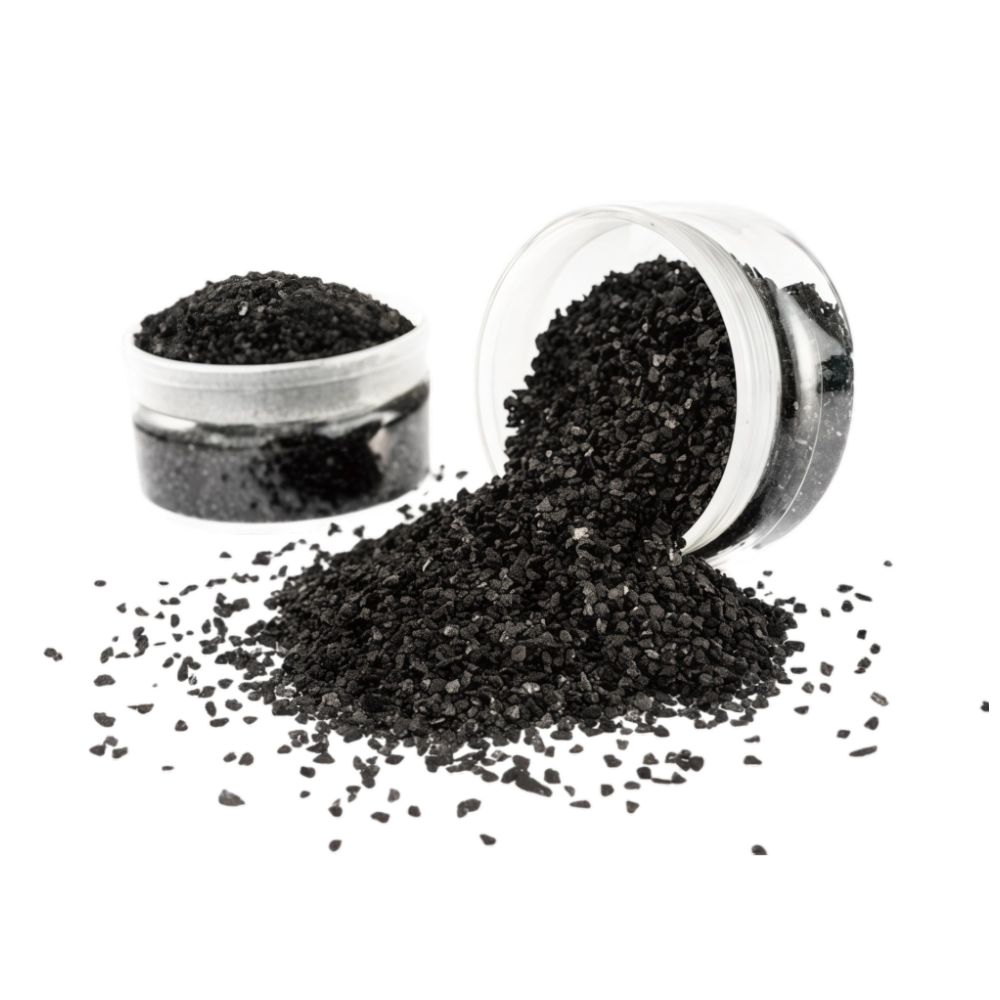
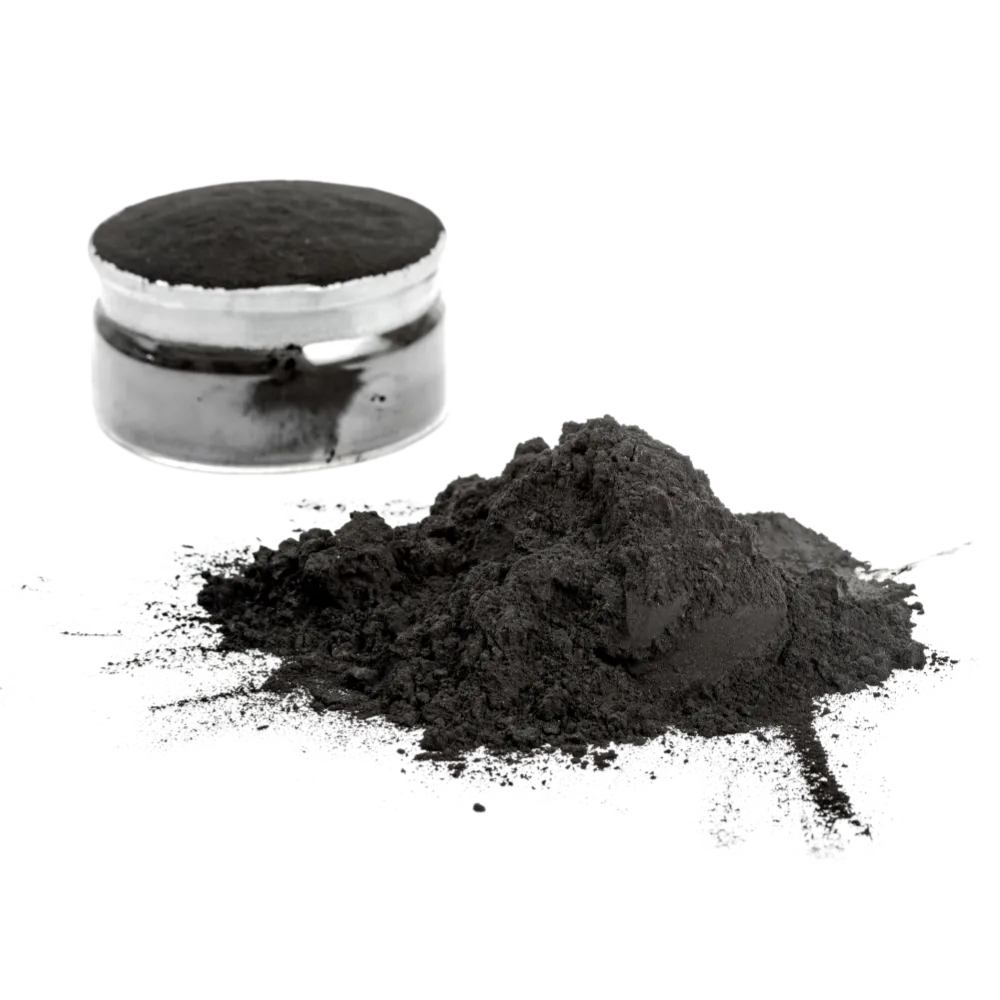
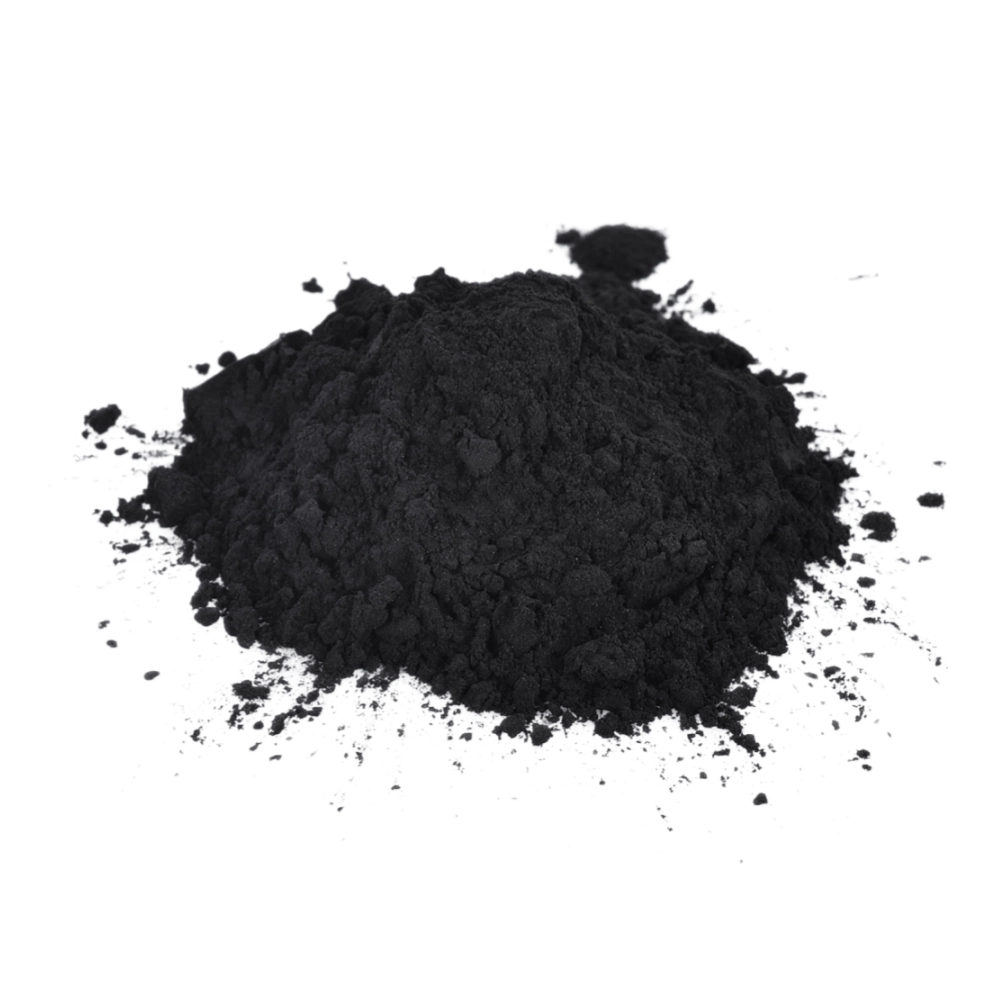
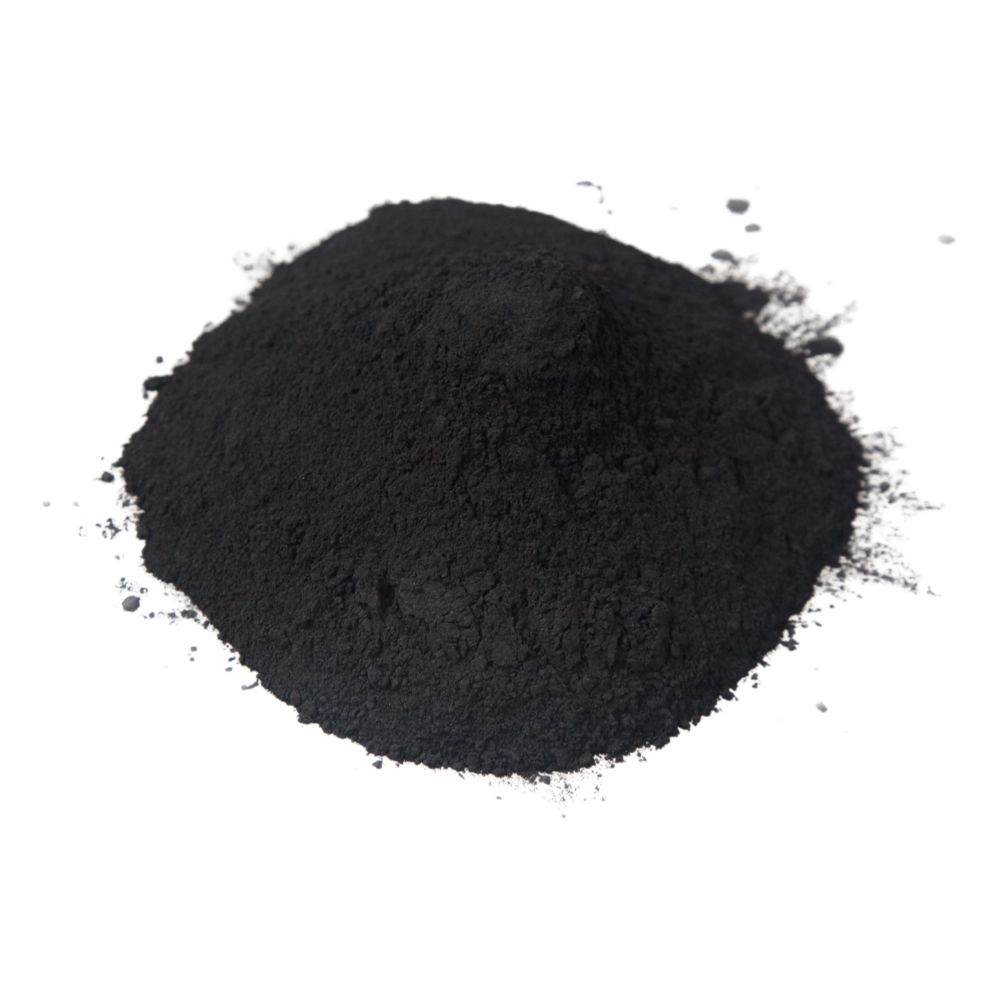



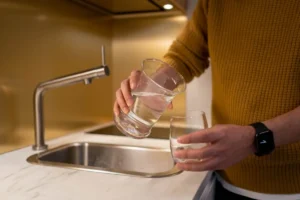



















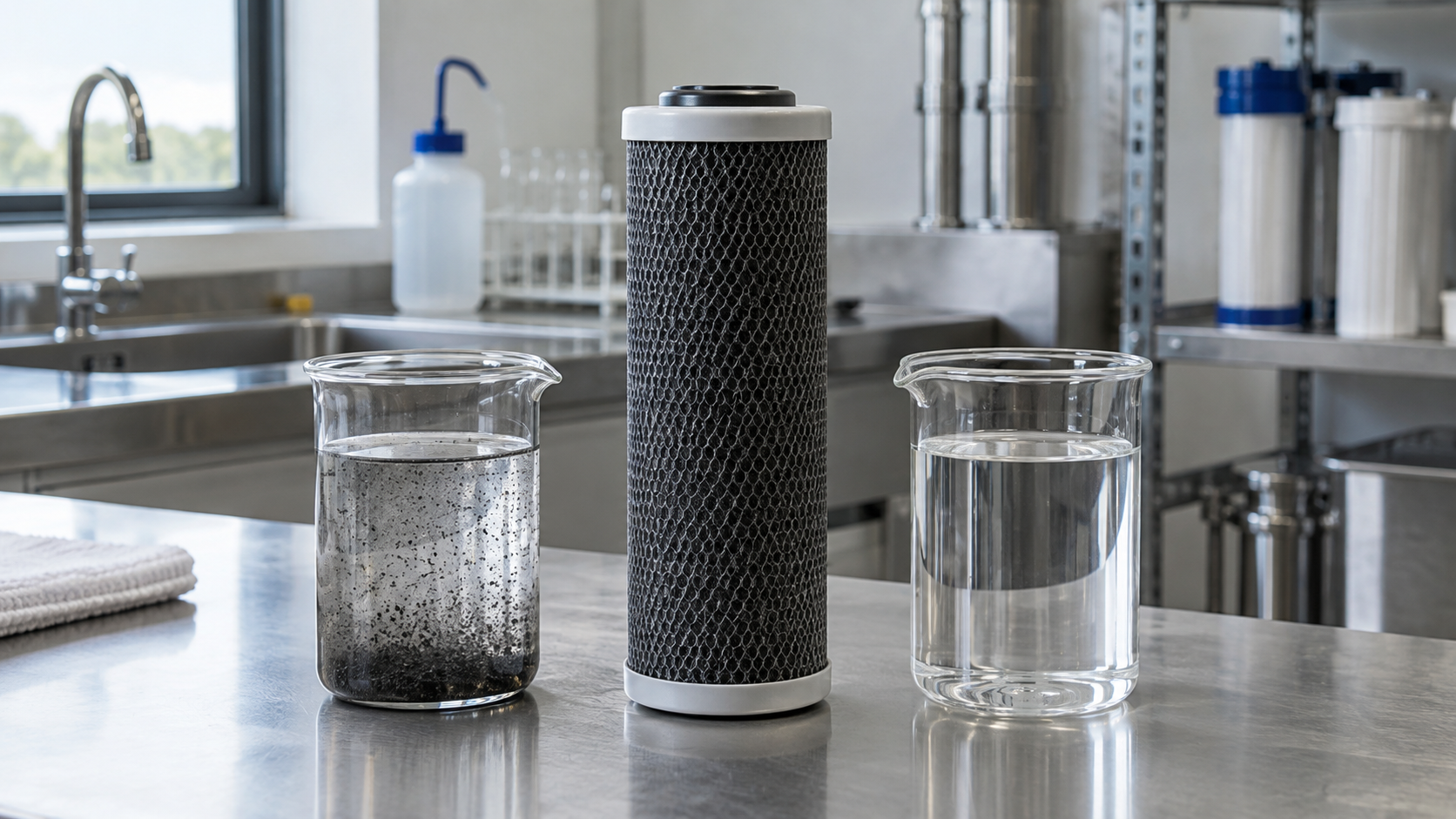
A new water filter is installed, but the first glass of water contains tiny black particles. For a consumer, that may mean a complaint or a returned cartridge. For a point-of-use (POU) filter manufacturer, it raises a more useful question: are the particles a normal start-up release, or evidence of a problem with the carbon media, cartridge assembly or downstream retention?
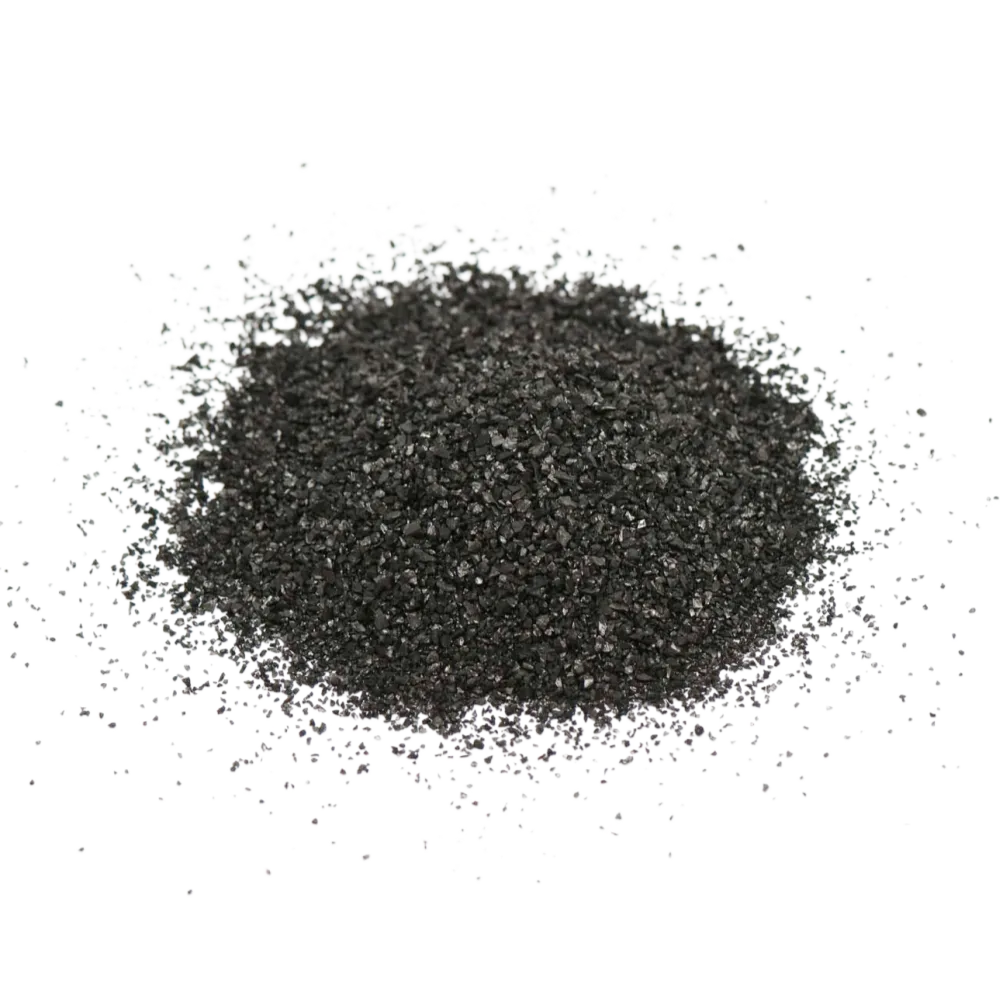
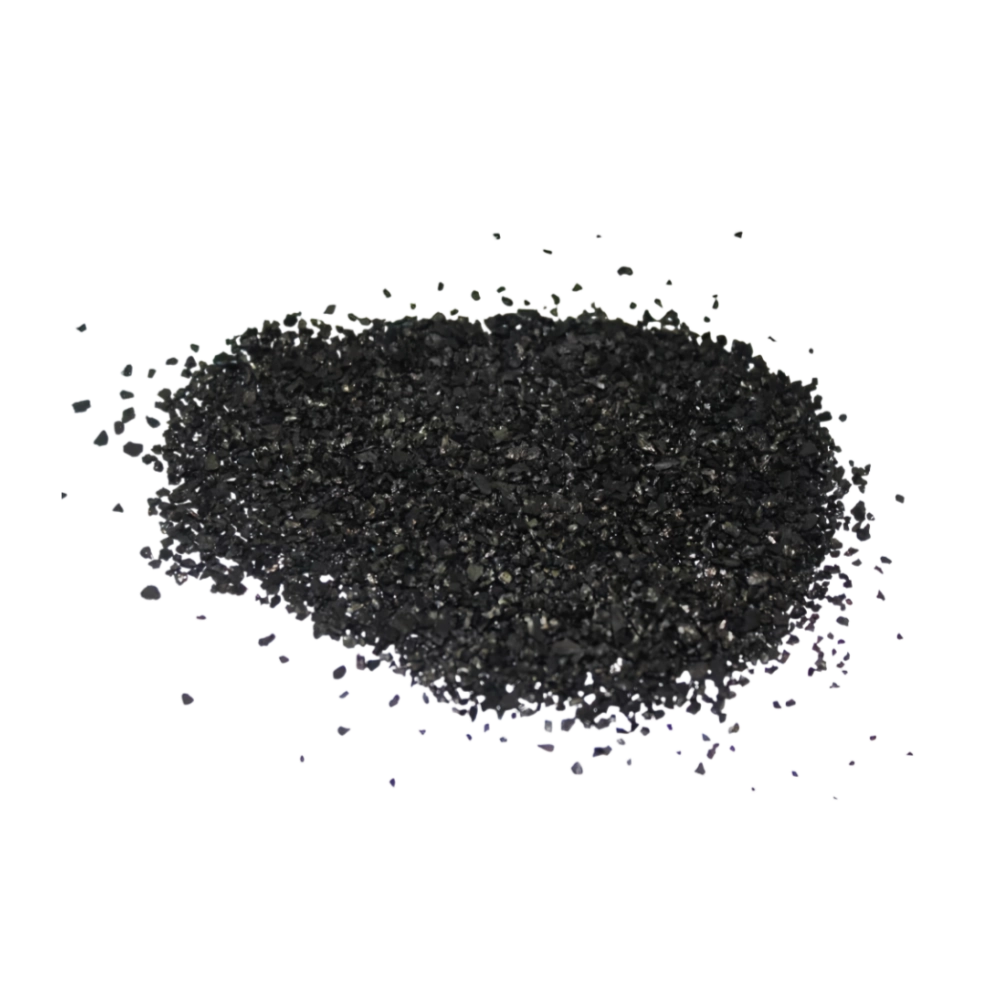
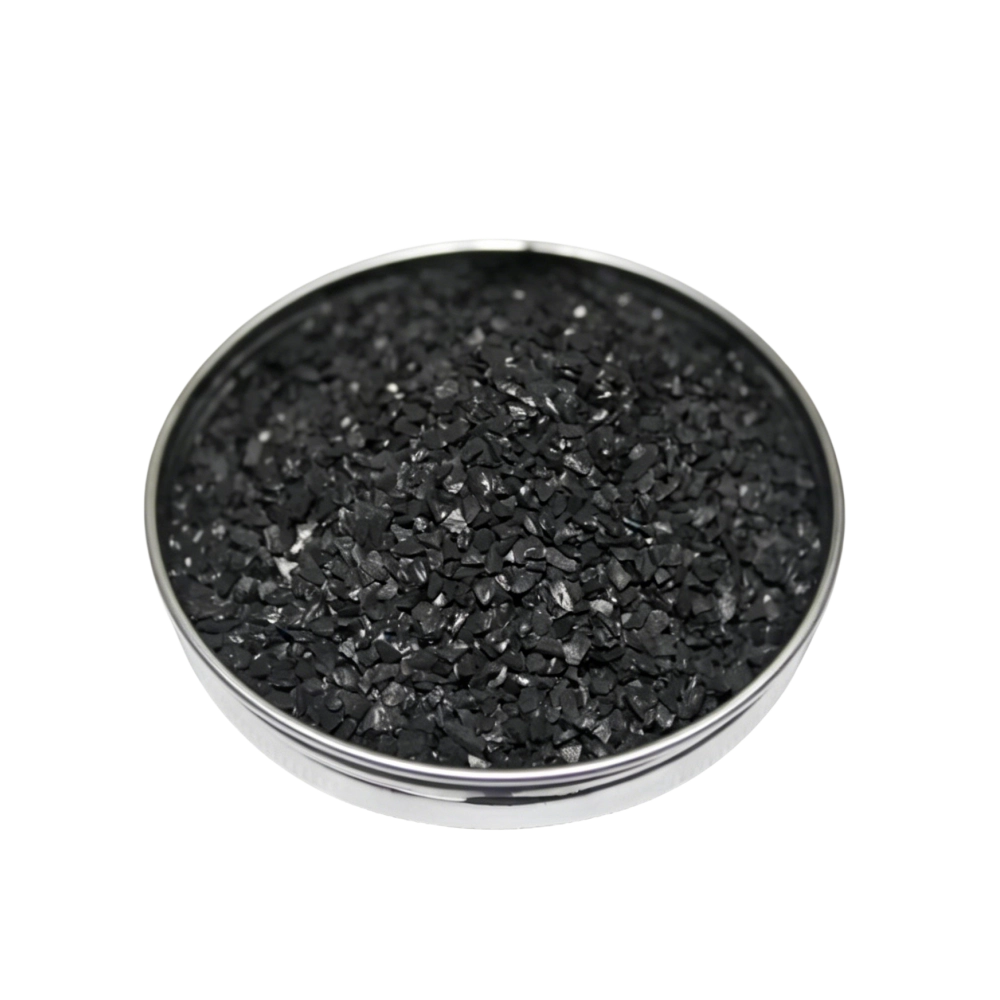
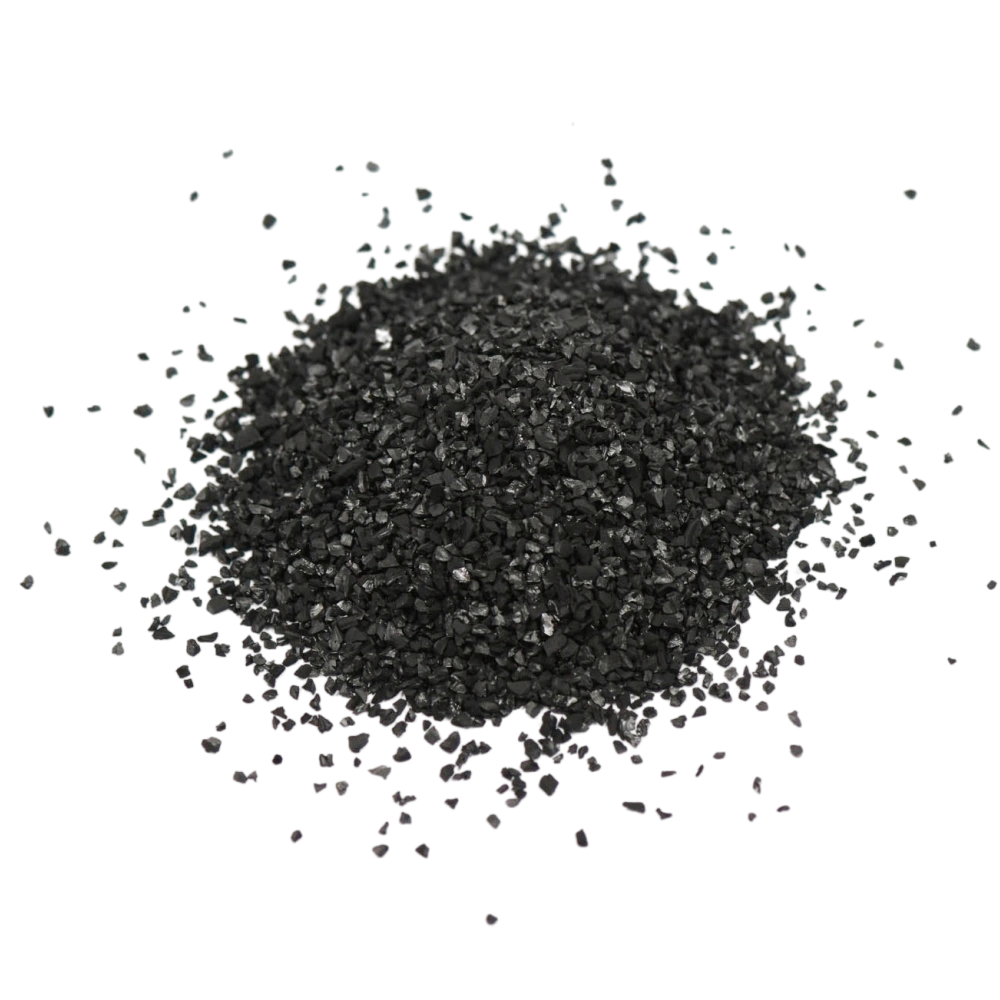
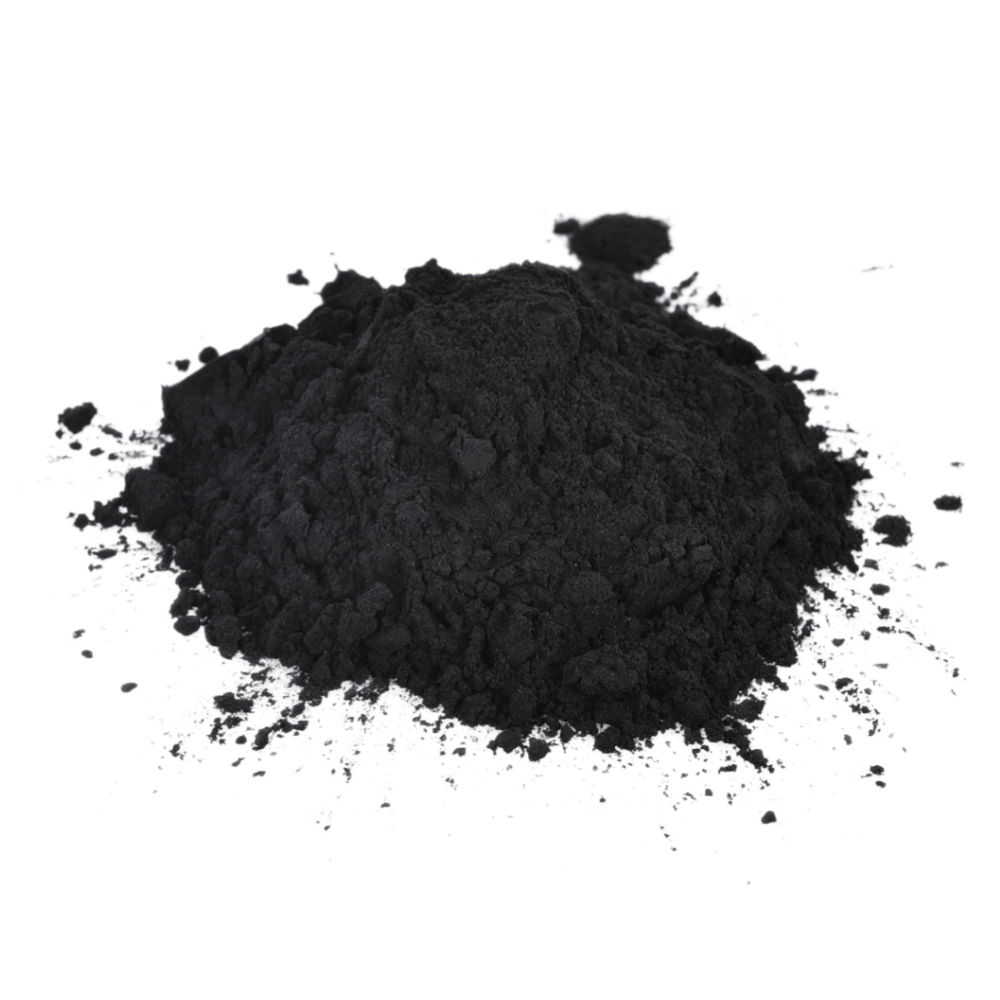
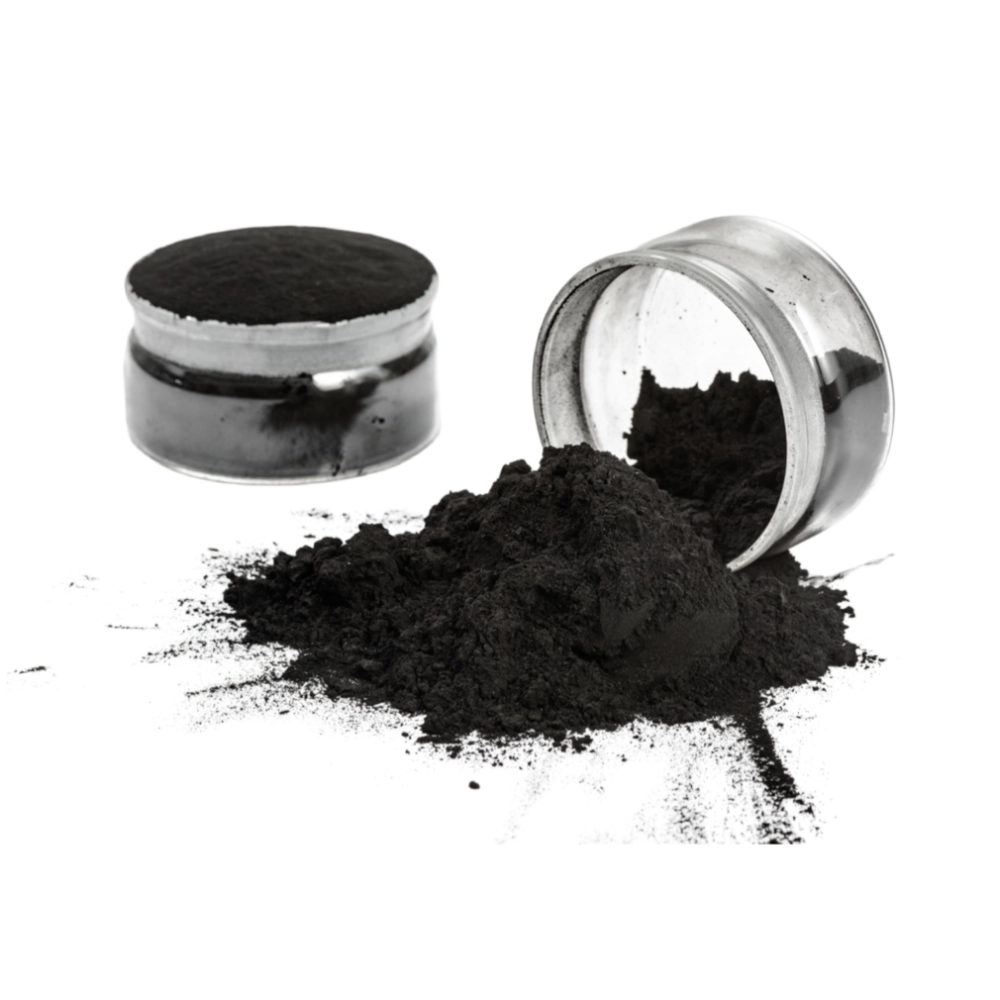
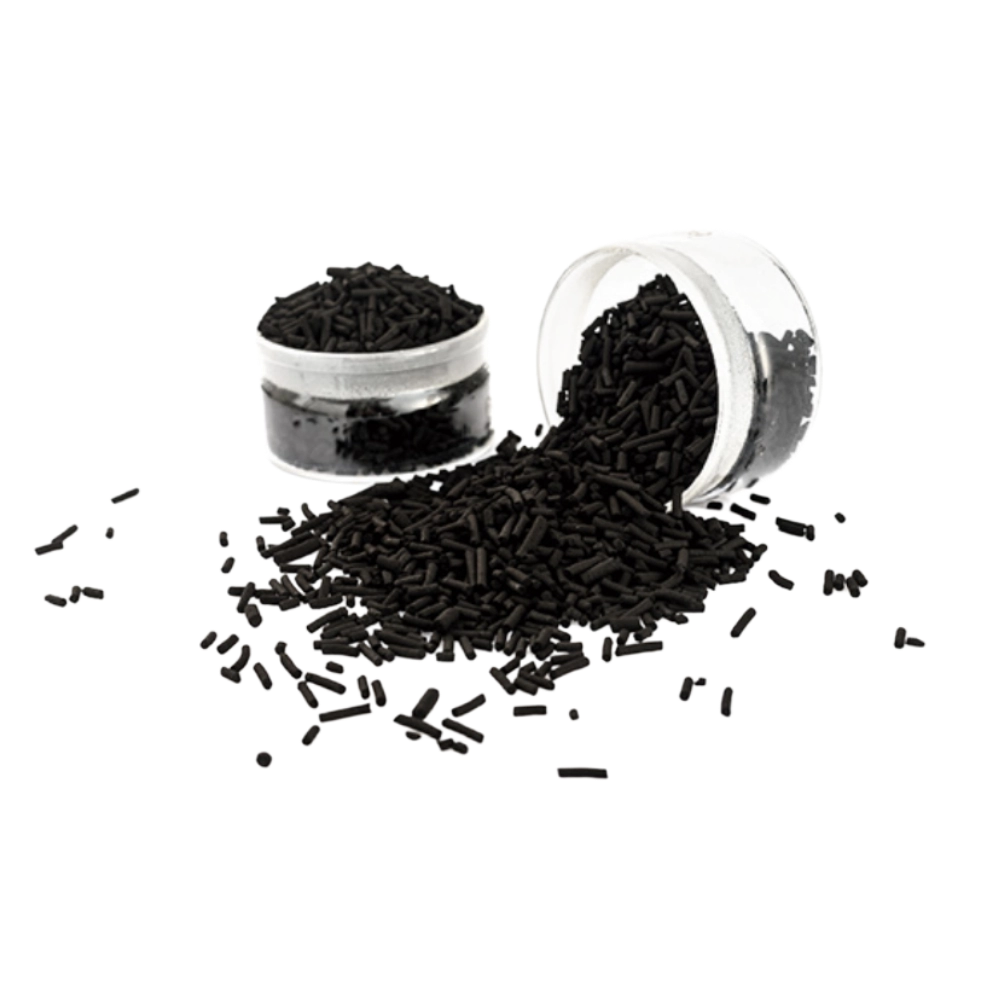
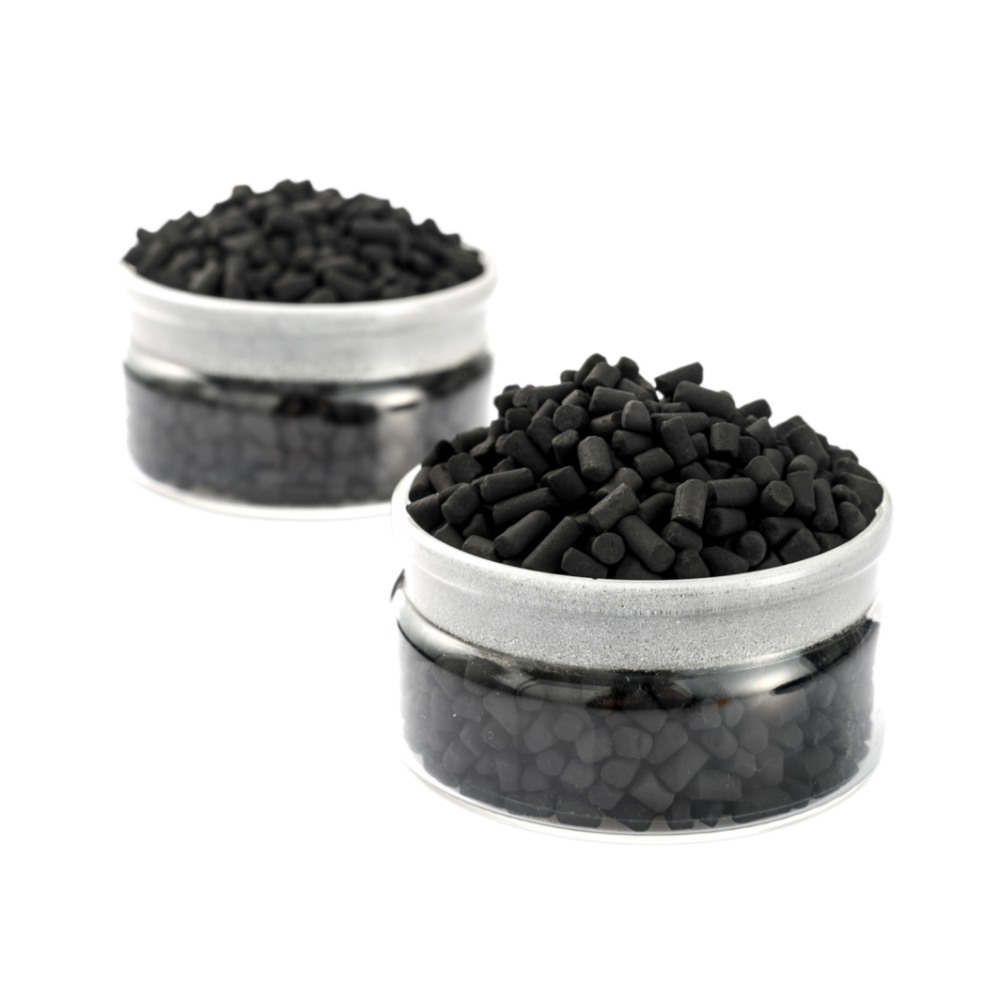
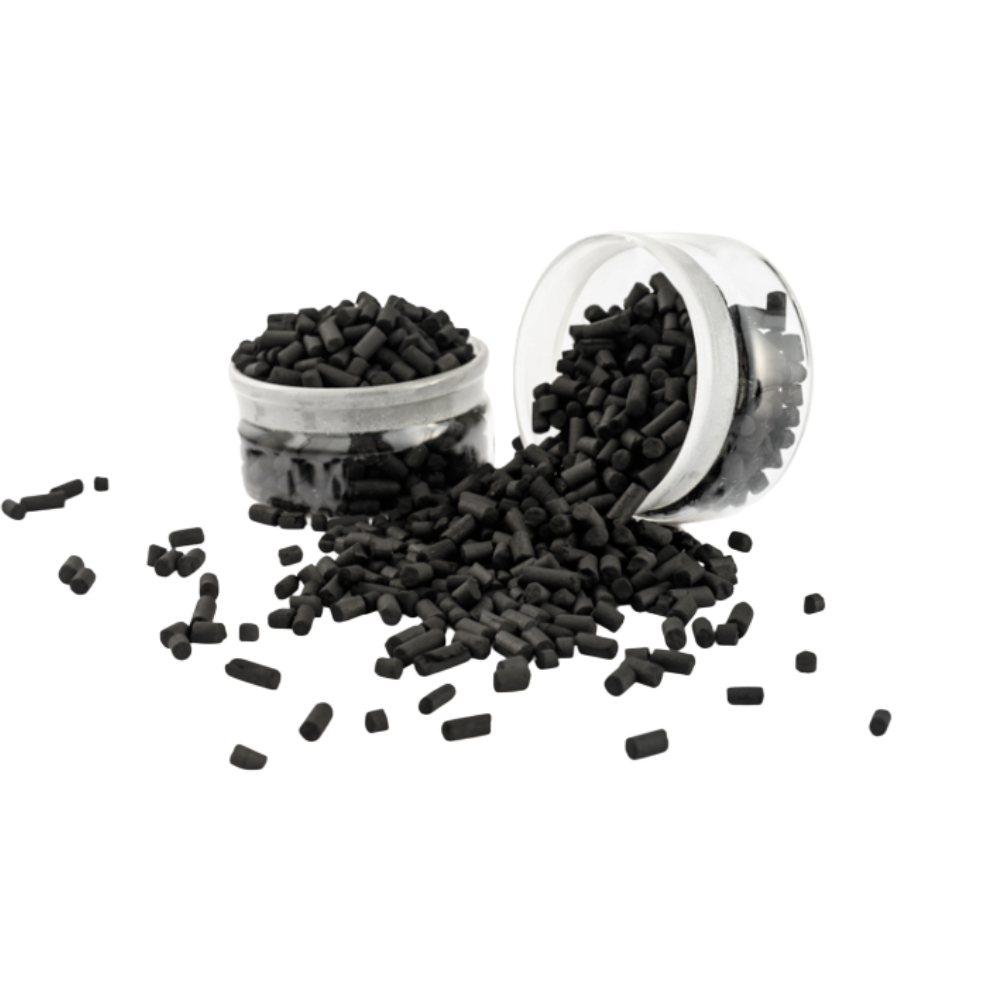
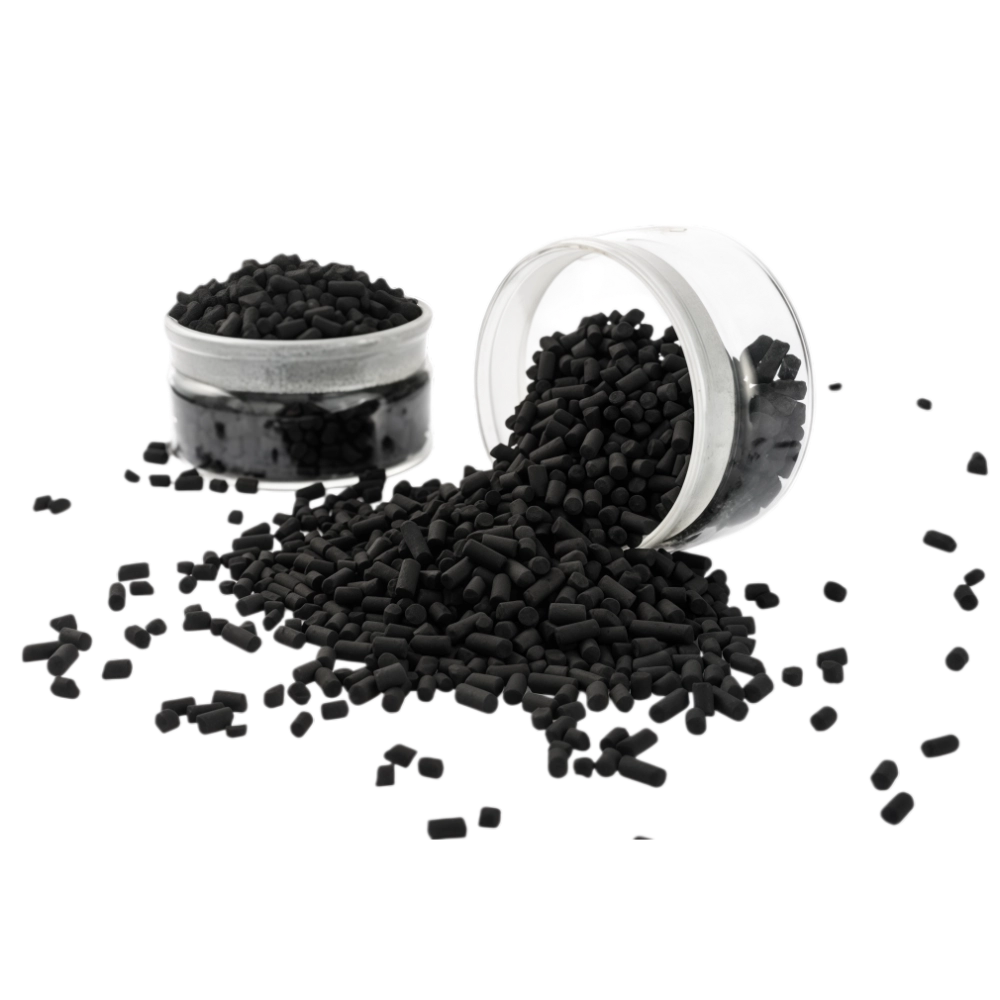
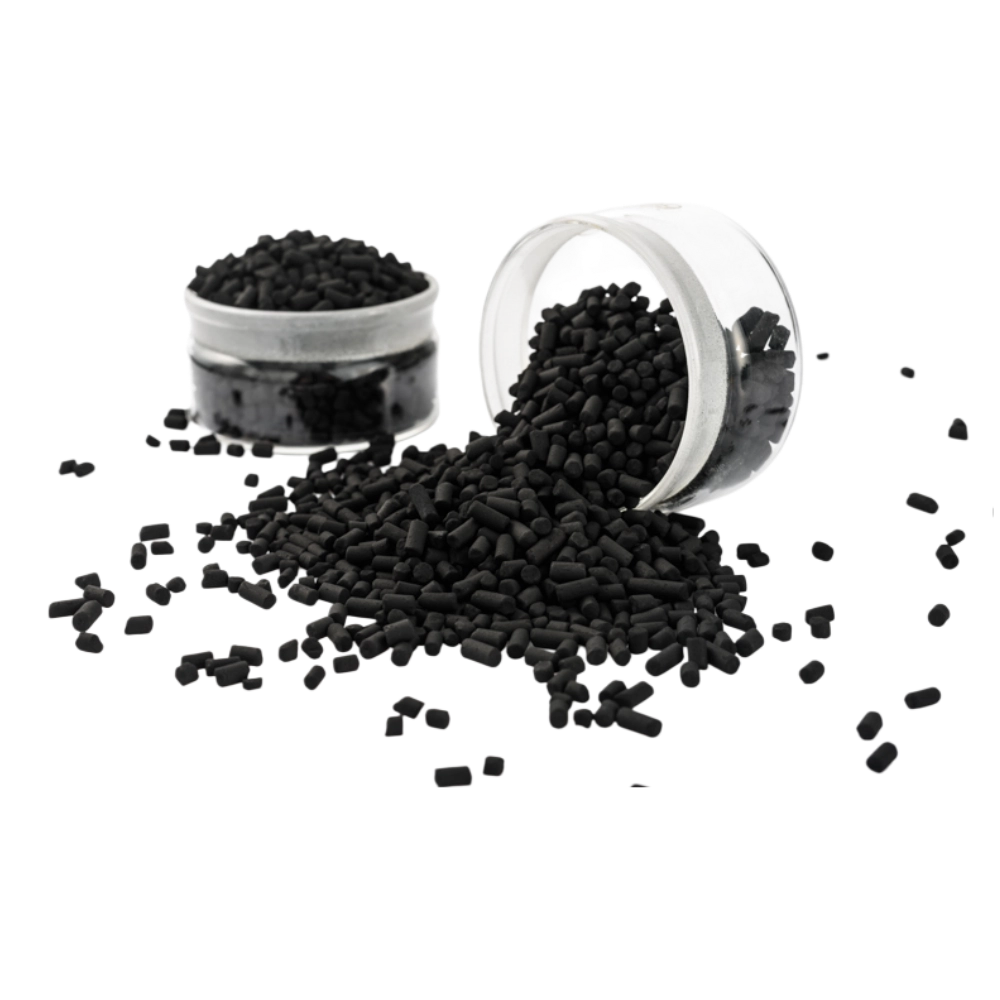
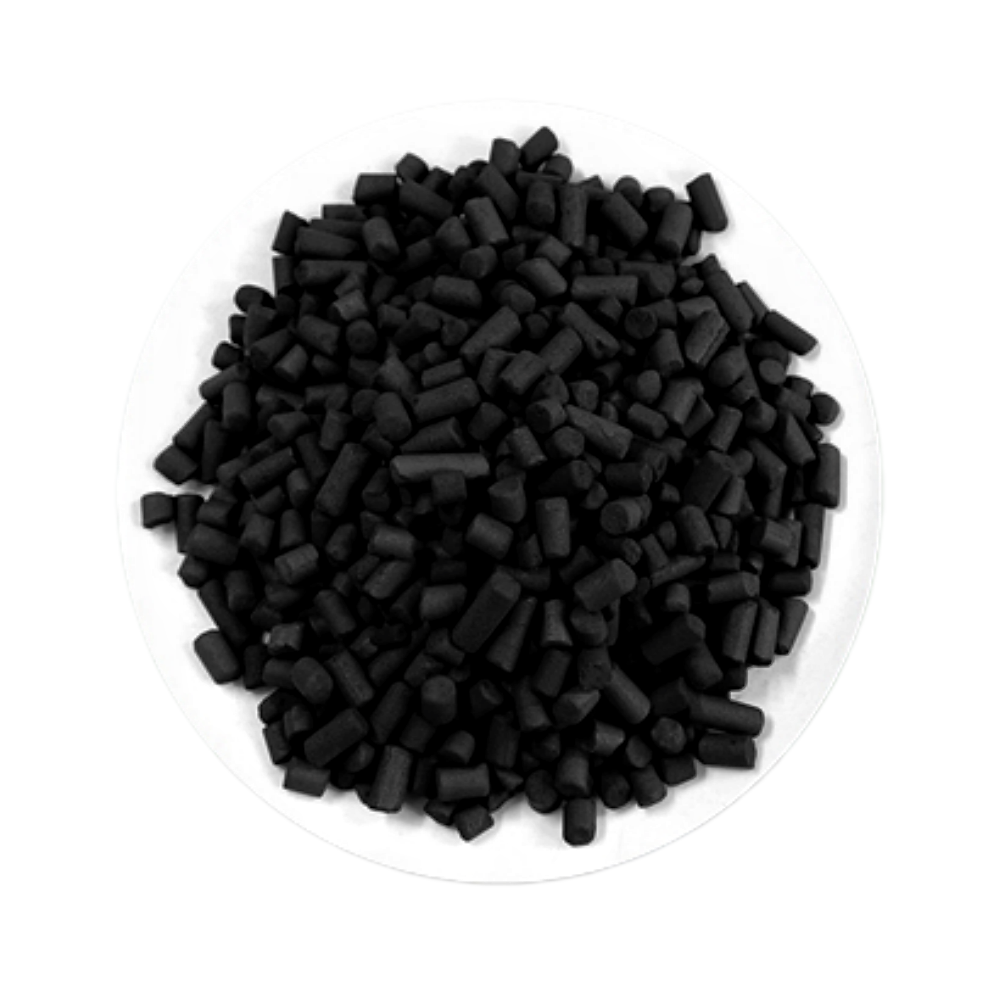
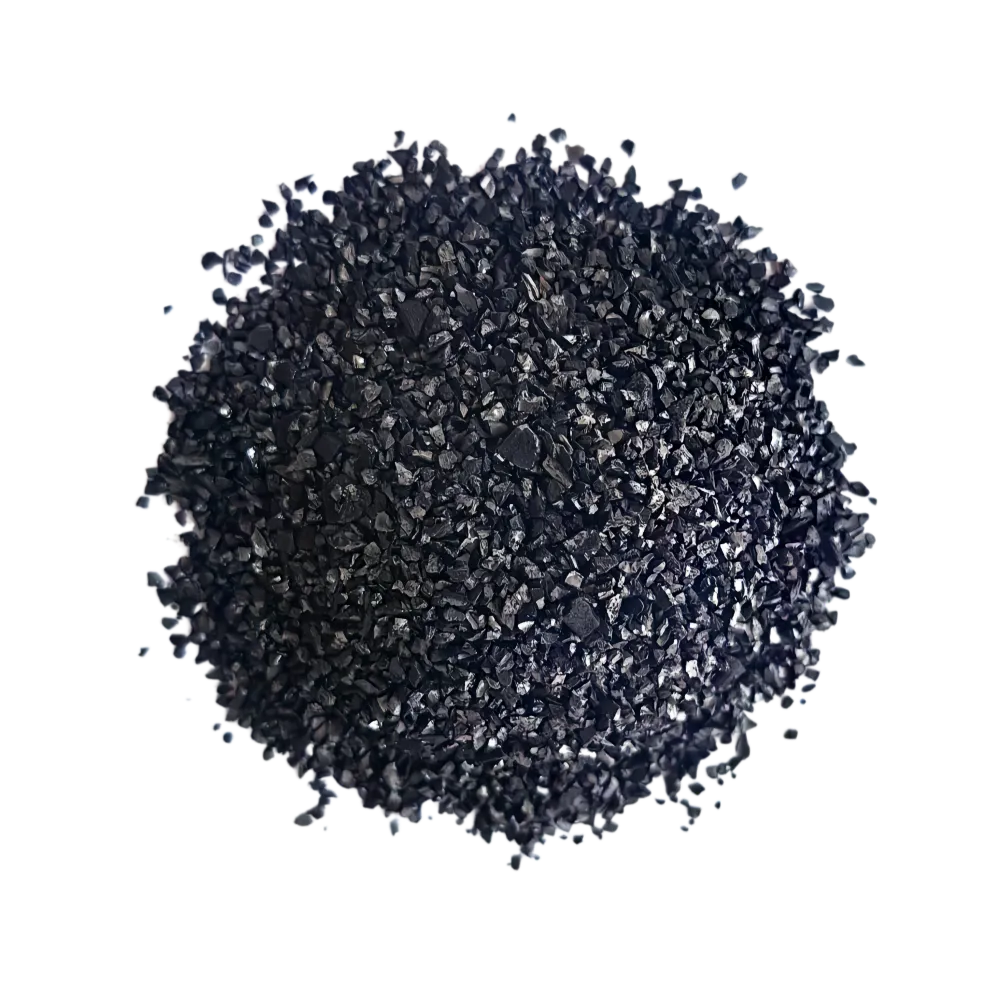
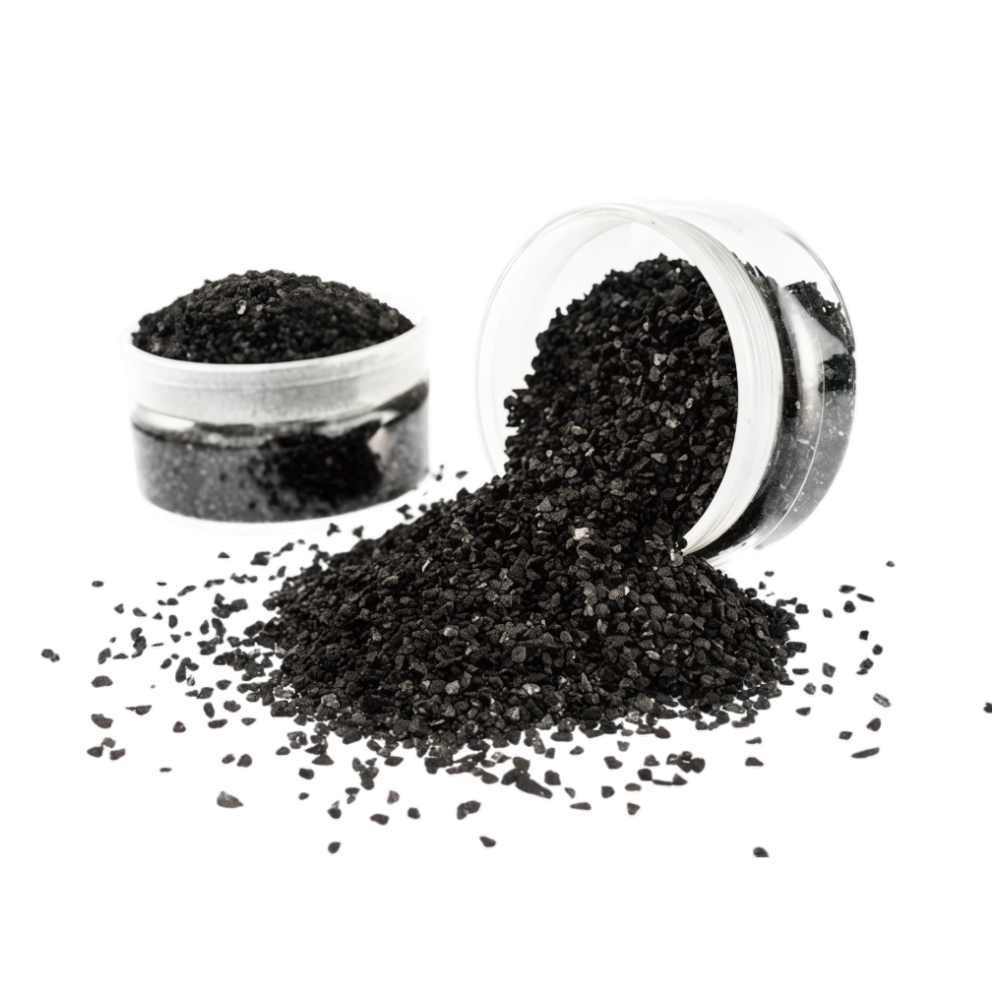
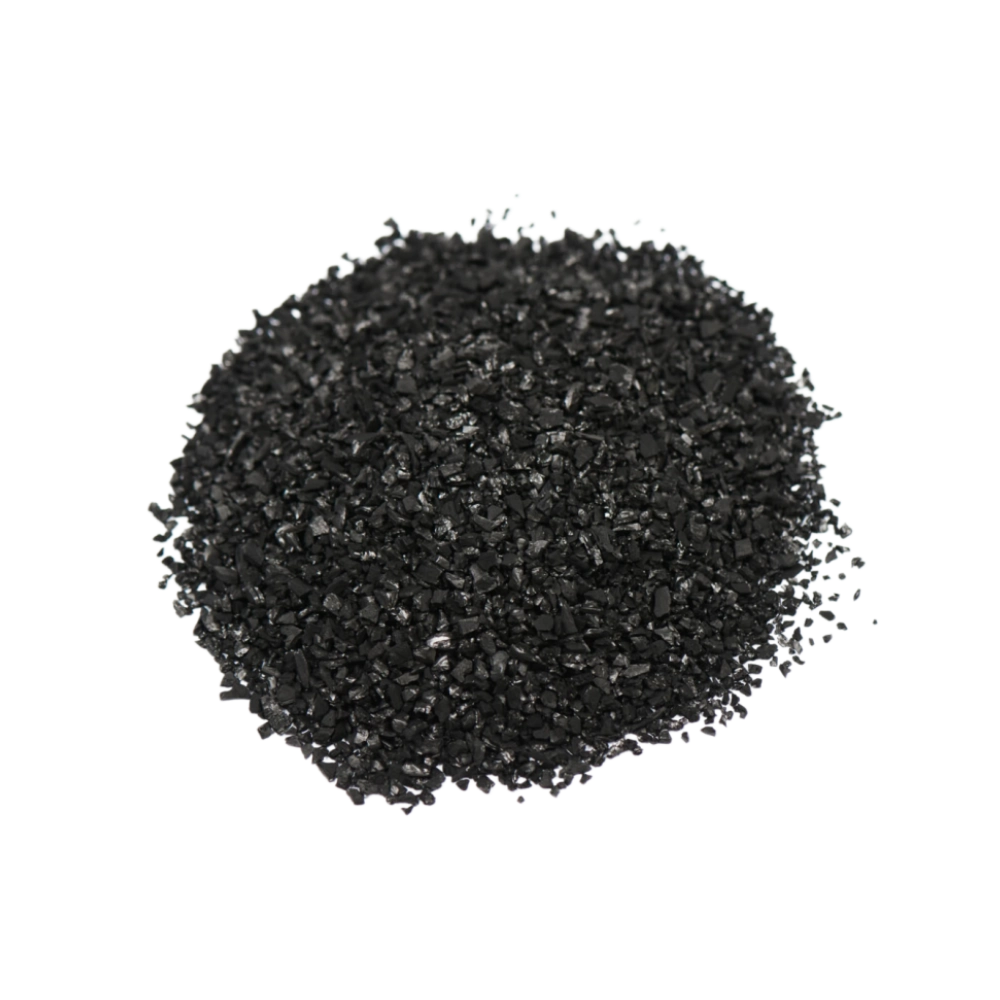
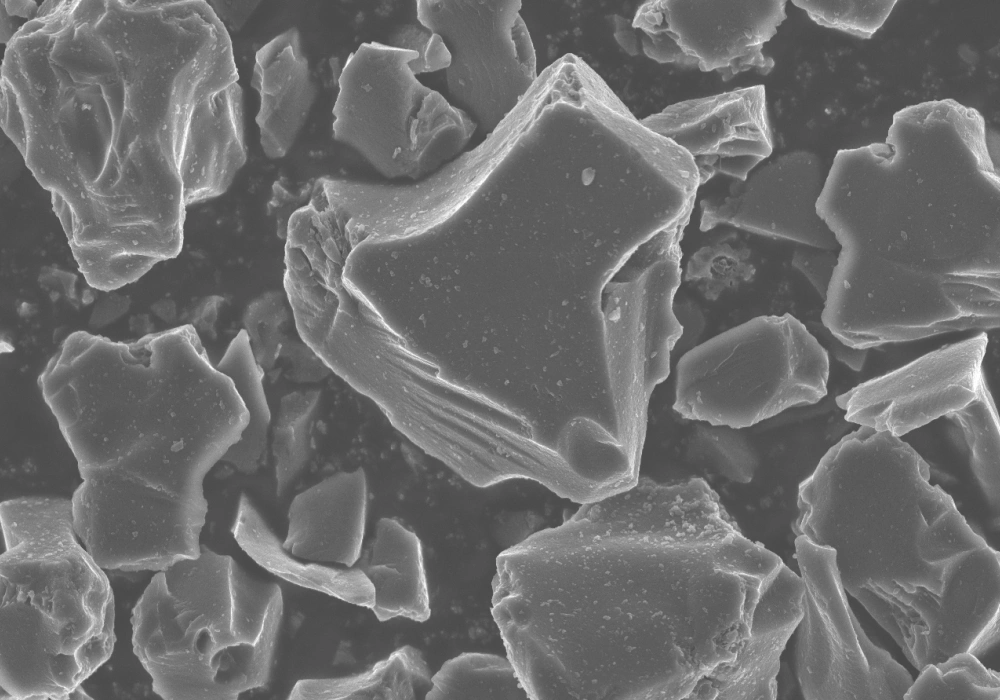
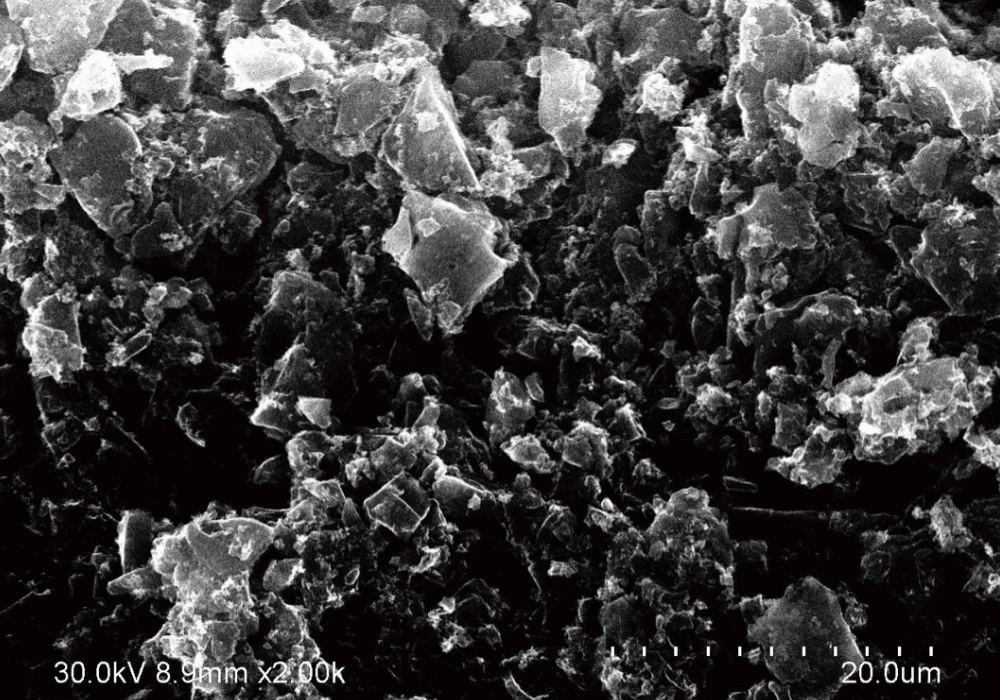
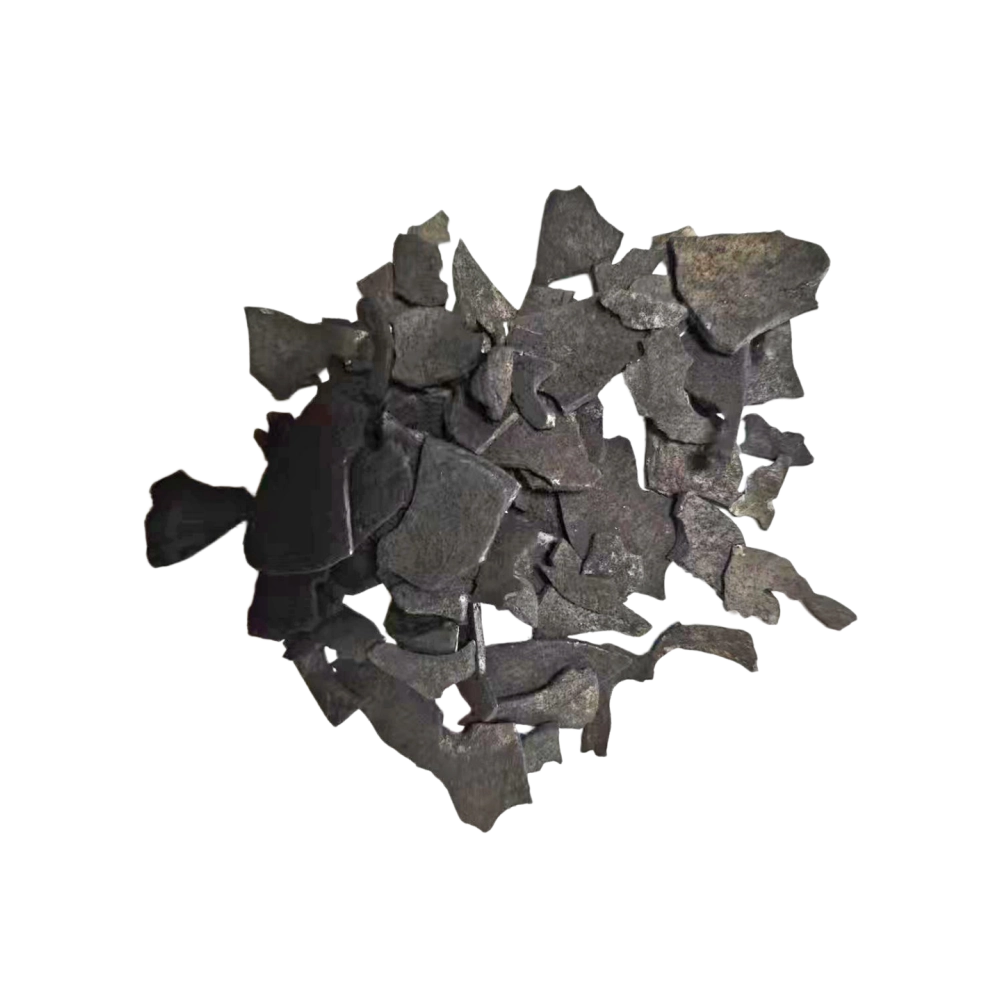
Carbon fines are small particles of activated carbon that can be released from fresh granular activated carbon (GAC), including during initial flushing. Filtration manufacturers therefore provide product-specific flushing instructions.
However, a cartridge that continues to discharge visible particles after the specified conditioning procedure requires investigation rather than reassurance.
The objective is not simply to specify "high iodine carbon". It is to control the finished filter's start-up behavior and particle retention.
Why a New Activated Carbon Cartridge Can Release Black Fines
Granular carbon is handled, transported and packed before the customer turns on the tap.
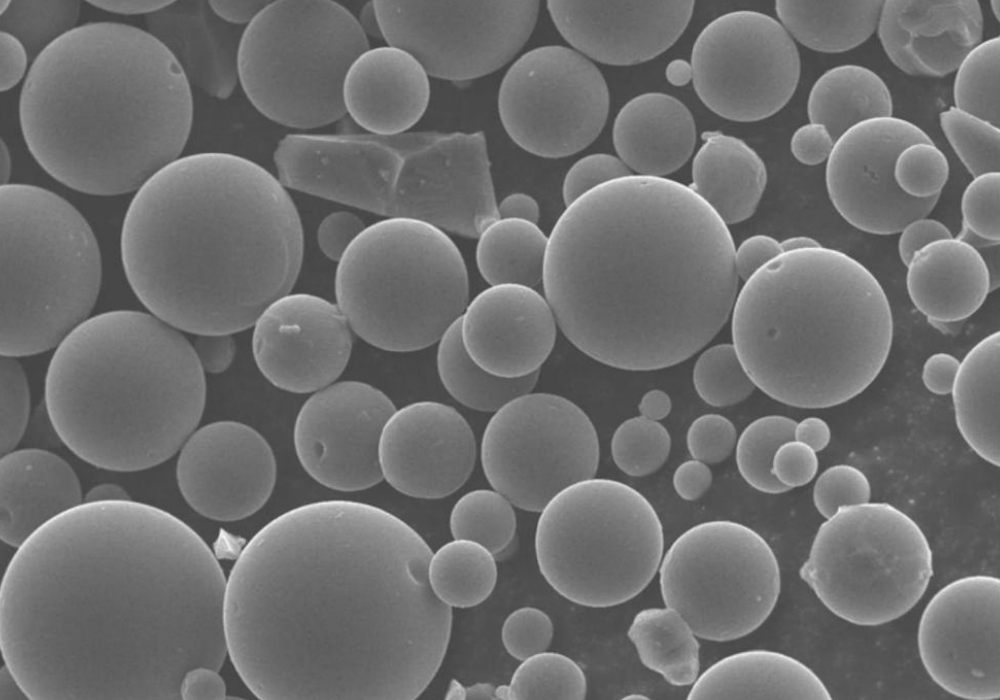
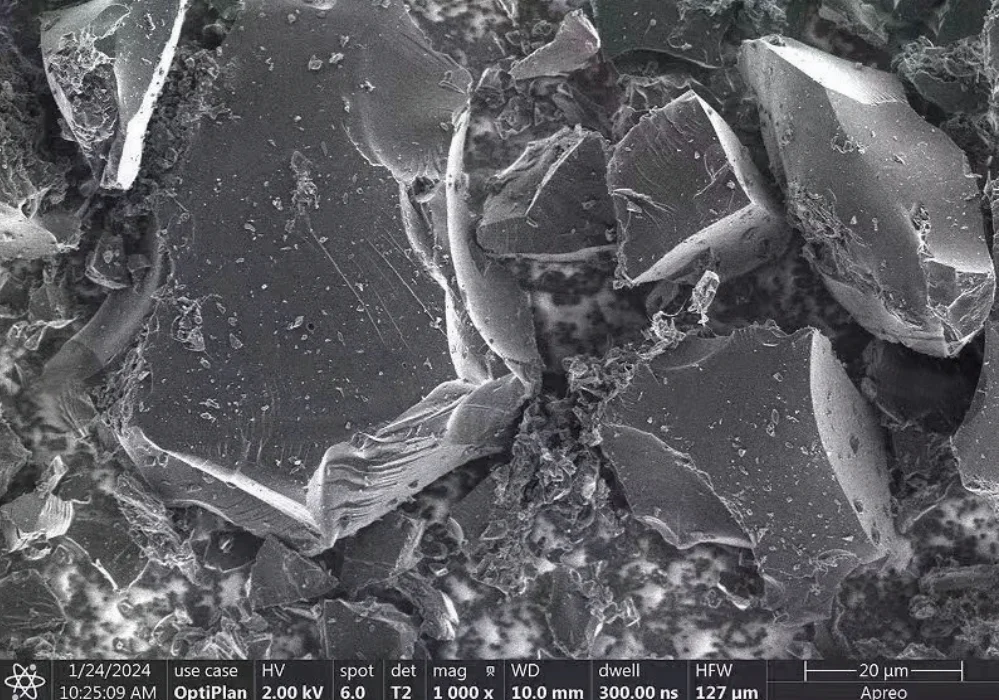
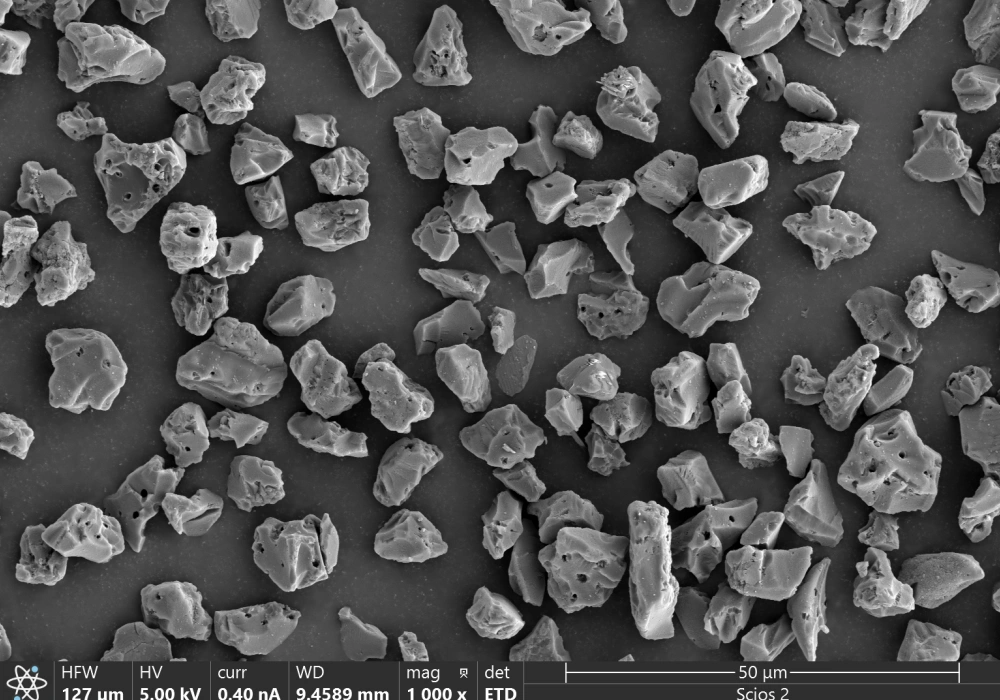
Some smaller particles may already be present from production and sizing. Additional fines can arise when granules rub against one another during vibration, filling and shipping.
First contact with water can carry loose particles out of the bed. The scale of the issue depends on the supplied media, handling process, cartridge structure, flow and flushing procedure.
Important: Black particles should not automatically be assumed to be carbon. If their identity is uncertain, retain a sample and check the water source, other components and the filter itself before assigning the cause.
From First Flush to Persistent Black Water: A Troubleshooting Matrix
Not every black-particle complaint has the same cause. OEM manufacturers should identify when particles appear, whether they disappear during the prescribed flush, and whether the problem is limited to a particular production lot.
| Observed Condition | Possible Explanation | Recommended OEM Check |
|---|---|---|
| Dark water only at first use; clears during the prescribed flush | Loose start-up fines | Record flush volume, flow and visible-particle endpoint. Confirm the instruction is practical for users. |
| Visible particles continue after the specified flush | Excess fines, damaged retention components or an assembly issue | Inspect outlet screens, pads, seals and carbon particle distribution. Retain water and media samples. |
| Clear at start, then particles appear following transport or a pressure change | Media attrition, settling or a retention-path problem | Repeat a shipping-vibration or hydraulic cycling test under the cartridge's intended conditions. |
| Black particles accompanied by poor flow | Fines accumulation in the outlet or downstream filter; other fouling is also possible | Compare pressure drop and flow before and after conditioning. Examine the post-filter. |
| Only one production lot shows the problem | Media or assembly variation | Compare retained samples, lot COAs, filling settings and incoming inspection records. |
Important: No universal flushing time can be specified for every cartridge. OEM instructions should be based on a tested cartridge configuration and should be followed before the water is used.
If particles persist or their source is unknown, stop using the affected cartridge and investigate in accordance with the manufacturer's instructions.
Five Controls That Matter Before the Cartridge Reaches the Customer
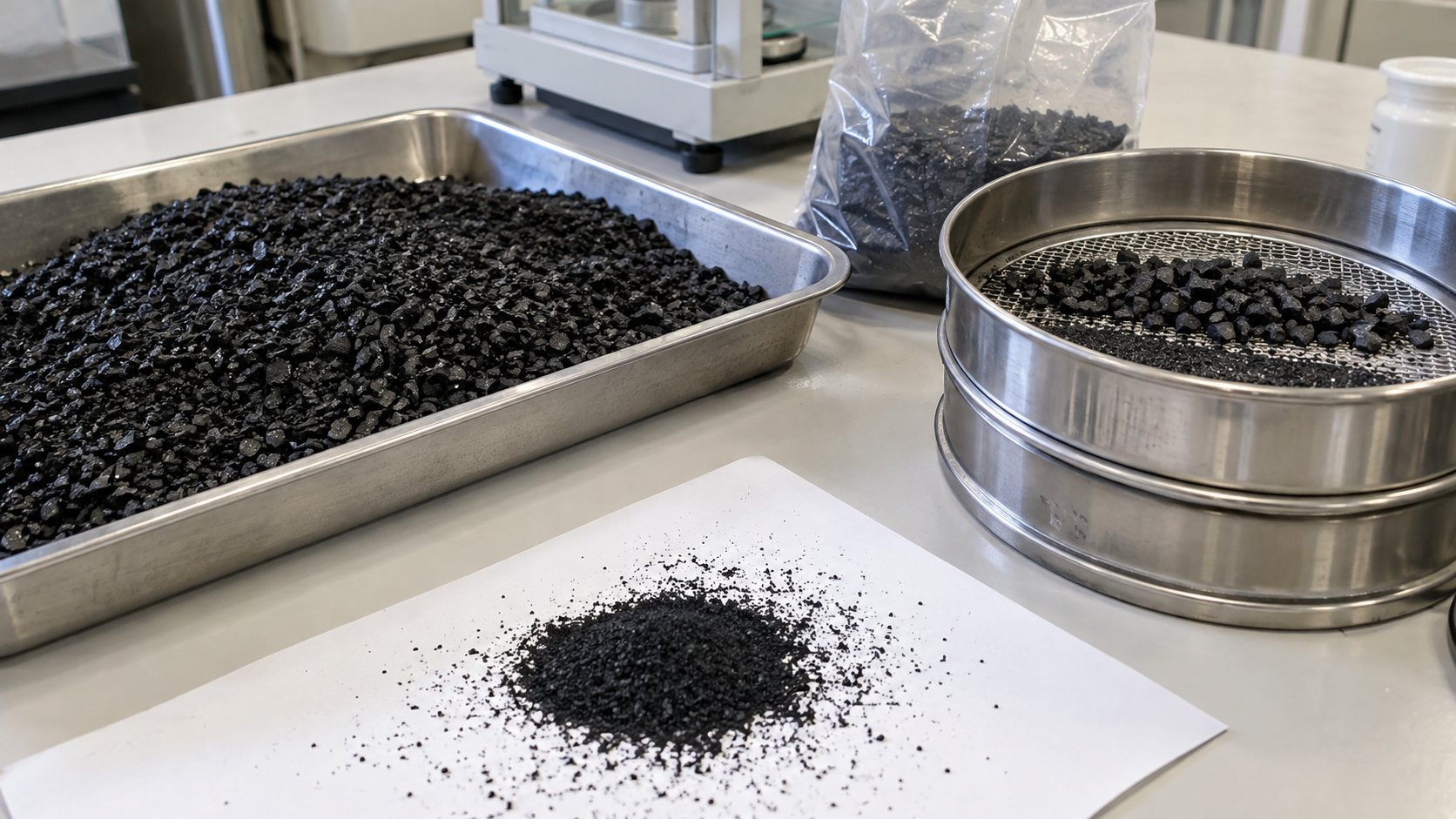
1. Specify Particle Size Distribution, Not Just a Nominal Mesh
A nominal 12×40 mesh description, for example, does not by itself reveal how much undersize material remains in a lot.
Agree on a sieve-based distribution and a documented limit for undersize particles, using the method and acceptance criteria established for the application.
Choose particle size together with cartridge flow and contact-time requirements. Selecting coarser media solely to reduce fines may change filtration performance.
2. Verify Media Durability Under the Actual Handling Process
Ask the supplier for relevant hardness or abrasion data, then simulate the OEM's own filling, transport and installation sequence.
A hardness result from one test method is not interchangeable with an end-of-line fines result.
Measure what leaves the complete assembly, not just what remains in the raw-material bag.
3. Control Filling and Outlet Retention
Check whether carbon is unnecessarily fractured during conveying, vibrating or compaction.
Confirm that screens, nonwoven pads and outlet components retain the expected particle-size distribution without imposing unacceptable flow restriction.
Carbon block and loose-fill GAC are different constructions and require separate validation.
4. Validate a Repeatable Start-Up Flush
Develop a conditioning test at the intended flow and pressure.
Collect sequential outlet samples and record visible fines, flush volume and pressure drop.
Define the pass criterion before testing, using an appropriate particle or turbidity method if quantitative assessment is required.
Repeat across representative production lots.
5. Keep Lot Traceability and Complaint Samples
Link incoming carbon lots to finished cartridge lots.
When a complaint occurs, compare a returned cartridge with retained units from the same batch and a reference batch.
Without traceability, a media issue and an assembly issue can look identical.
What to Request From an Activated Carbon Supplier
For an OEM qualification program, a supplier conversation should cover particle size distribution and fines measurement, hardness or abrasion method, ash and moisture, intended drinking-water contact requirements, sample availability and lot-level documents.
Iodine number may be useful for characterizing carbon, but it does not establish low-fines performance or certify the complete cartridge.
| Requested Item | Why It Matters | Evidence to Ask For |
|---|---|---|
| Size distribution / undersize | Controls media compatibility with retention screens | Lot-specific sieve results and agreed limits |
| Hardness or abrasion resistance | Helps screen media for handling damage | Named method and test conditions |
| Dust / fines behavior | Addresses the visible start-up complaint directly | Defined measurement method and sample results |
| Drinking-water suitability | Supports correct material selection and claims | Grade-specific documentation and independently verifiable certification where required |
| Repeatability | Reduces surprises between production lots | COA, lot ID, sample retention and change-control process |
Certification language must be precise.
NSF/ANSI 42 covers specified aesthetic-performance claims for drinking-water treatment units and includes applicable material-safety assessment.
Certification of a bulk medium to a different standard does not automatically certify a finished POU cartridge or support every contaminant-reduction claim.
Confirm the exact model, scope and claim in the certifier's listing.
How PURESTAR Can Support POU Filter Media Screening
PURESTAR lists coconut shell activated carbon for POU filtration and water-treatment applications.
Its product portfolio includes acid-washed coconut shell granular carbon options, but the appropriate grade for a given cartridge must be selected against its geometry, media loading, water chemistry, flow and validation protocol.
Explore PURESTAR Coconut Shell Activated Carbon or review the company's particle-size technical guide before shortlisting a grade.
To request a useful media comparison, send the current carbon mesh and loading weight, cartridge type (GAC or carbon block), outlet-retention structure, target flow, flushing requirement and a description or photograph of the observed fines.
PURESTAR can then discuss which documented product specifications and samples are relevant for your OEM trial. No zero-fines or certified-cartridge performance is implied without testing.
Frequently Asked Questions
Are Black Particles From a New Water Filter Always Dangerous?
Not necessarily, but appearance alone cannot identify the particles or establish water safety.
Follow the cartridge's instructions and investigate any unexplained or persistent discharge.
Does a Higher Iodine Number Mean Less Carbon Dust?
No. Iodine number is an adsorption-related characterization. Fines depend on factors such as particle distribution, physical durability, handling and cartridge retention.
Can Prewashing Alone Solve the Issue?
Conditioning or washing may remove loose fines, but it will not repair a damaged outlet screen or prevent ongoing attrition.
Verify both the media and finished design.
Which Carbon Is Best for a POU Cartridge?
There is no universal grade.
The OEM should match media properties with target contaminants, water chemistry, cartridge design, flow, start-up behavior and applicable certifications, then validate the finished product.
Request a Cartridge-Specific Carbon Sample
Developing a new POU cartridge or investigating repeated black-particle complaints?
Send your cartridge design, current media specification, target flow and observed flushing result to sales@psd-carbon.com.
Ask for available coconut shell activated carbon specifications, relevant lot documents and a trial sample for your own validation.
Technical References:
NSF: Filtration System Standards and Claim Scope

