































Activated Carbon Selection for Industrial Exhaust: VOC, H₂S, Odor & Solvent Recovery
A 4 mm pelletized activated carbon may work well in one VOC adsorber but perform poorly in an H₂S or mixed-odor system. The problem is not always carbon quality. In many cases, the carbon chemistry or particle structure simply does not match the gas stream.
For environmental engineering companies and exhaust treatment equipment manufacturers, activated carbon selection should therefore start with a simple question:
This guide provides a practical starting point for four common industrial exhaust applications: VOC removal, H₂S removal, mixed odor control and solvent recovery.
Start With the Pollutant, Not the Highest Carbon Specification
| Exhaust Problem | Typical Contaminants | Starting Carbon Direction | Main Selection Concern |
|---|---|---|---|
| Industrial VOC Exhaust | Toluene, xylene, esters and mixed organic vapors | Pelletized or vapor-phase activated carbon | VOC composition, CTC, airflow and humidity |
| H₂S Removal | Hydrogen sulfide | Impregnated activated carbon | Chemical removal capacity and gas conditions |
| Mixed Industrial Odors | H₂S, mercaptans, ammonia and organic odors | Impregnated or blended carbon | Actual gas composition |
| Solvent Recovery | Recoverable organic solvent vapors | High-activity vapor-phase carbon | Working capacity, regeneration and mechanical stability |
This is only a first screening step. Airflow, concentration, temperature, humidity, adsorber dimensions and operating mode still need to be reviewed before the final grade is selected.
1. VOC Exhaust: Start With Pelletized or Vapor-Phase Carbon
Activated carbon adsorption is widely used for VOC exhaust from coating, printing, packaging, chemical processing, electronics and other manufacturing operations.
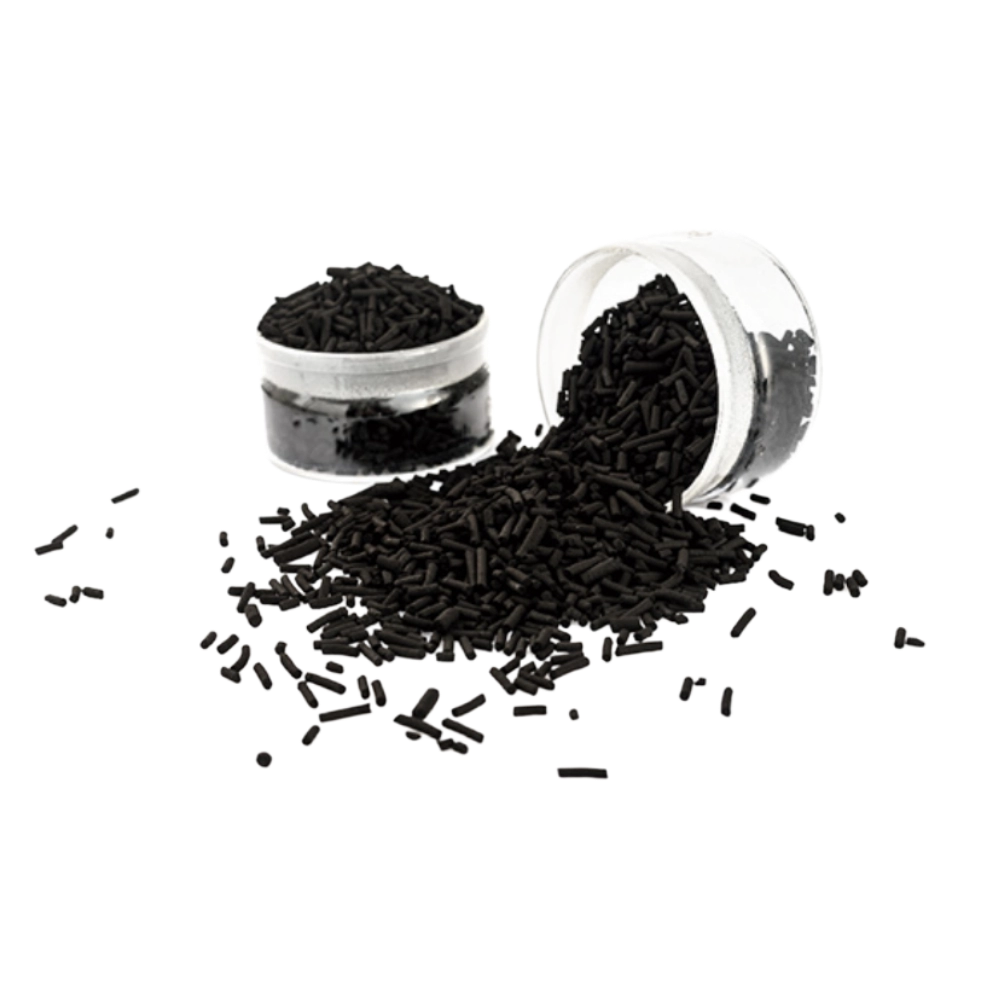
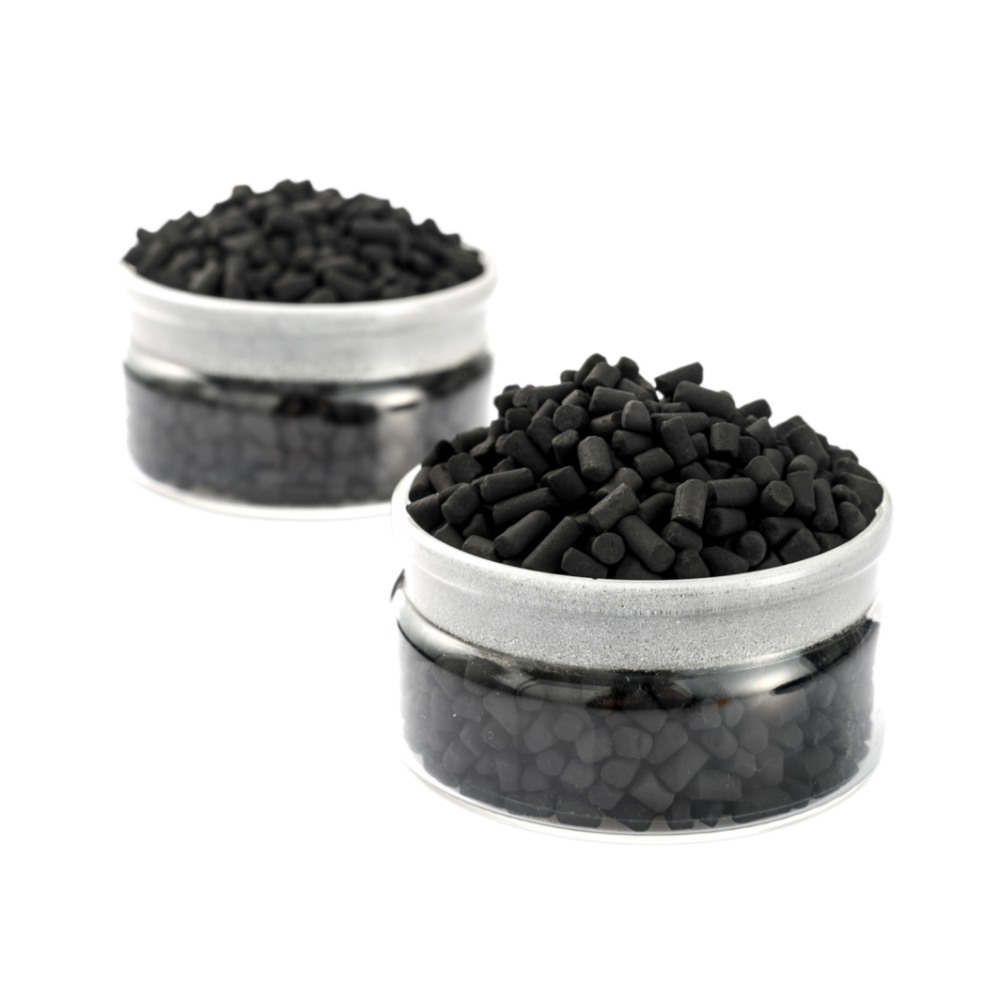
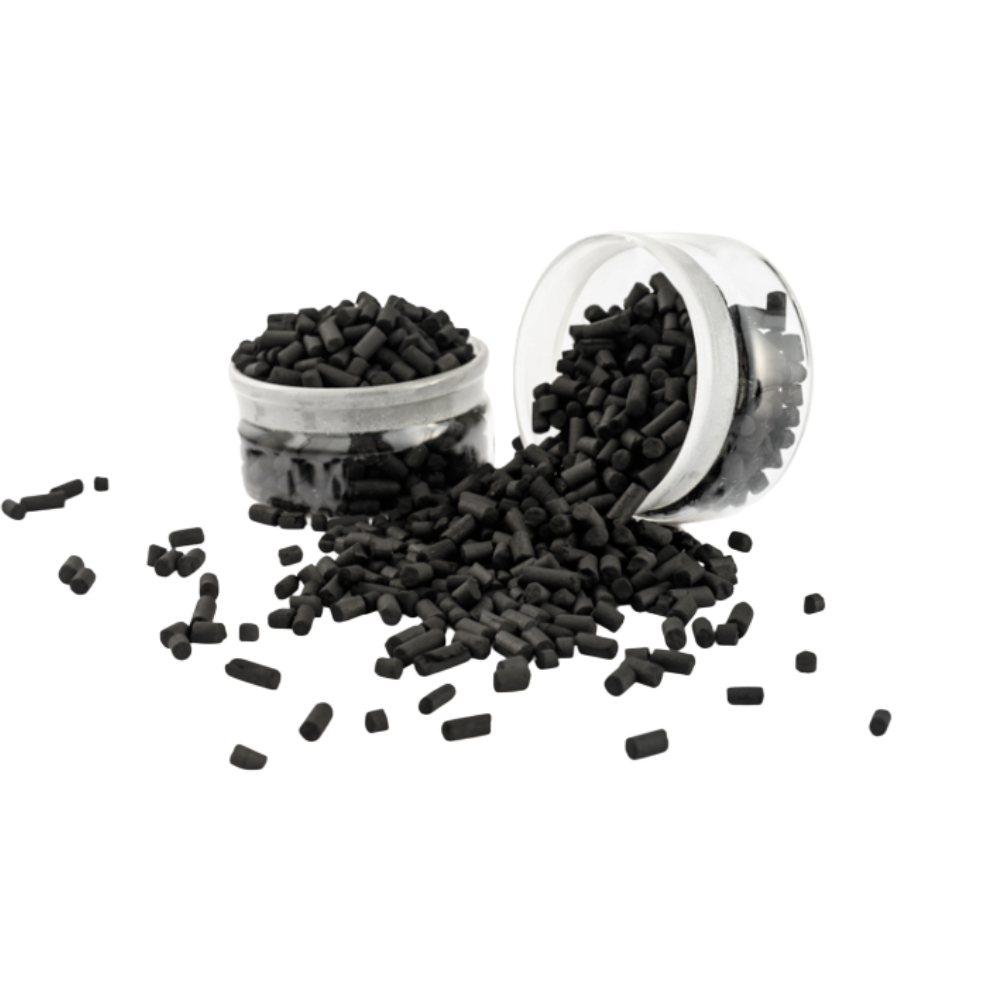
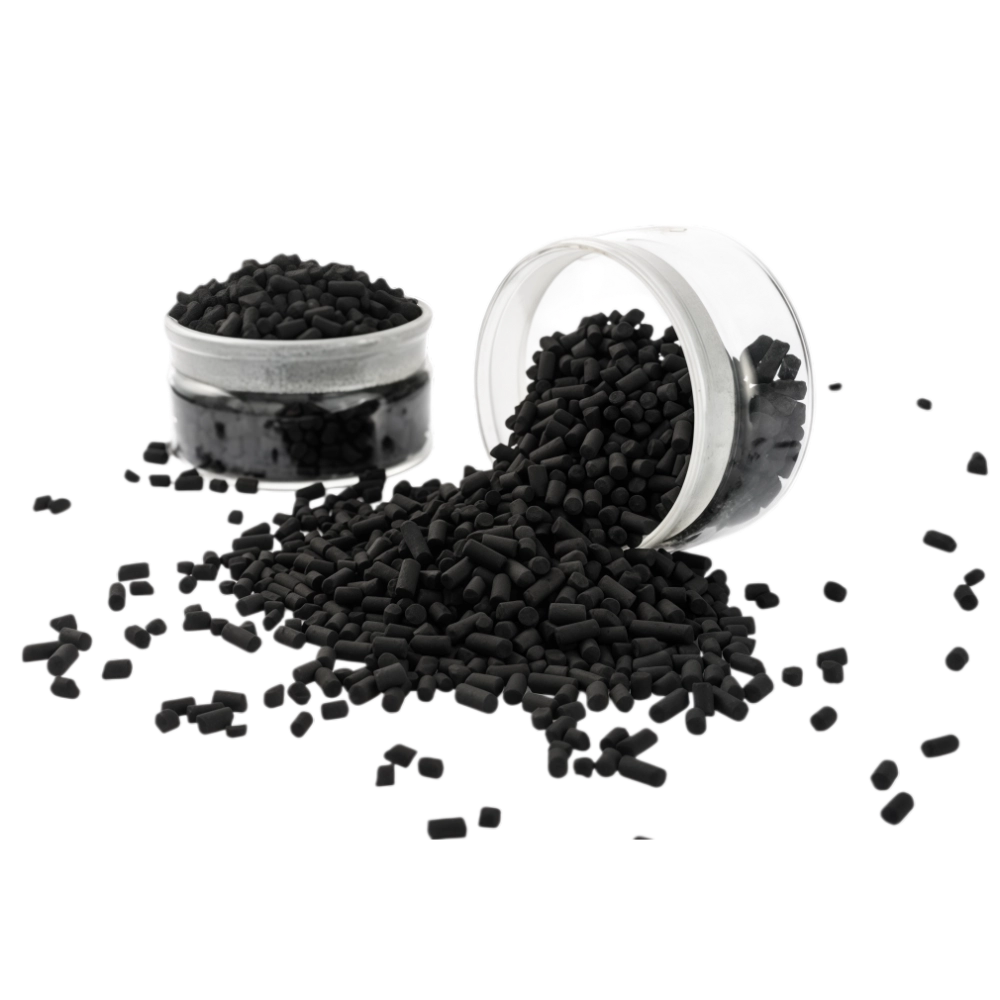
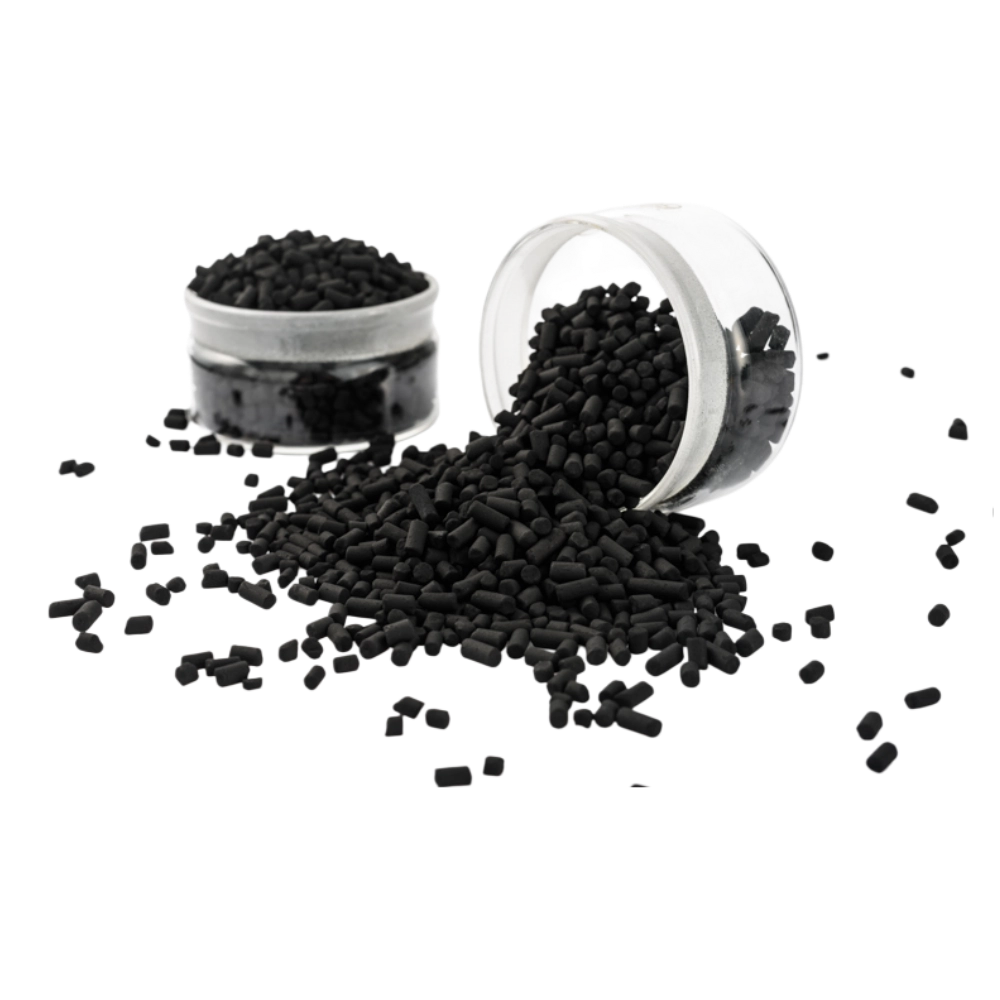
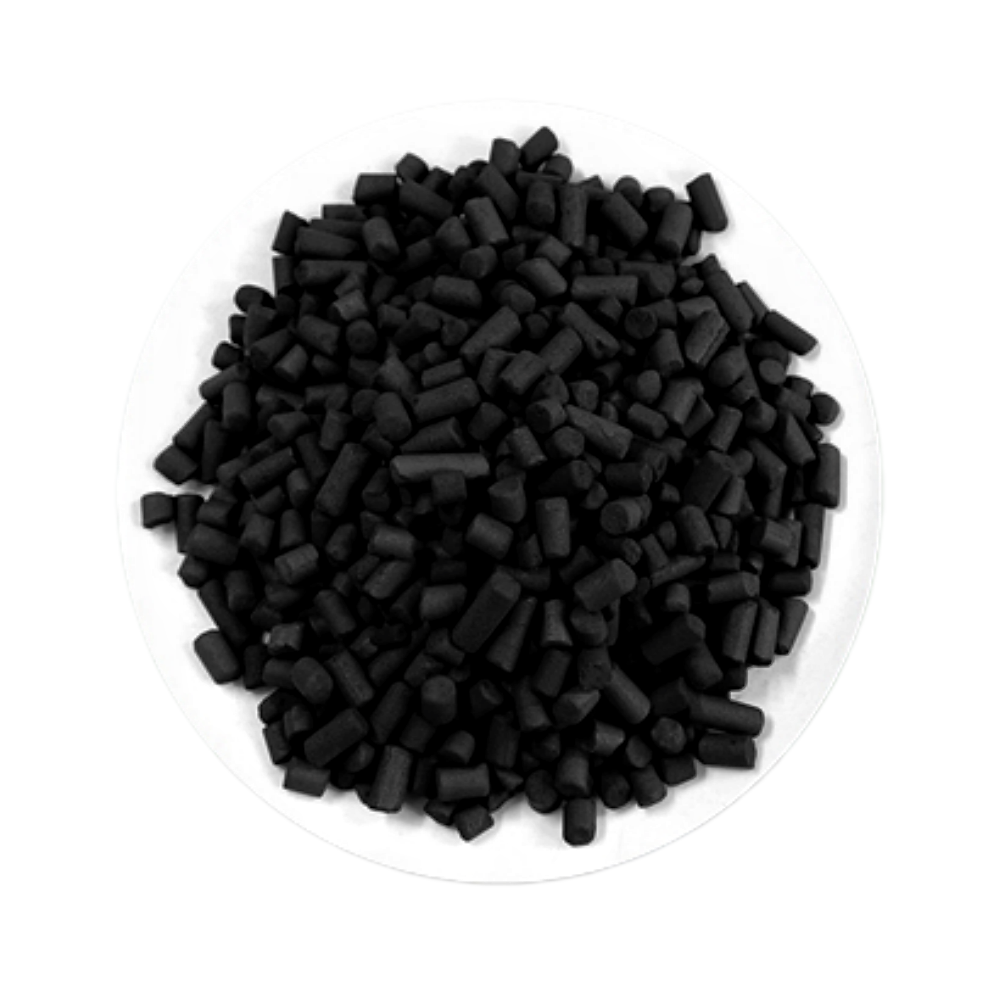
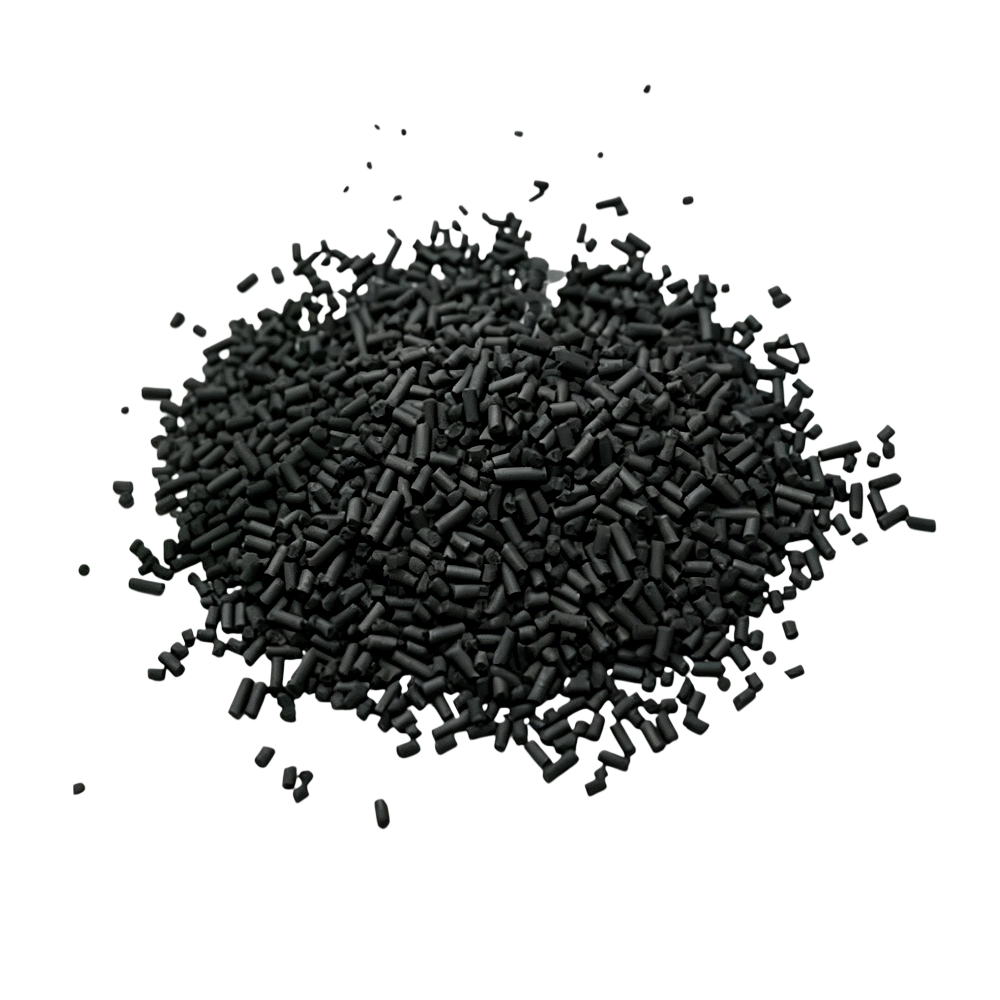
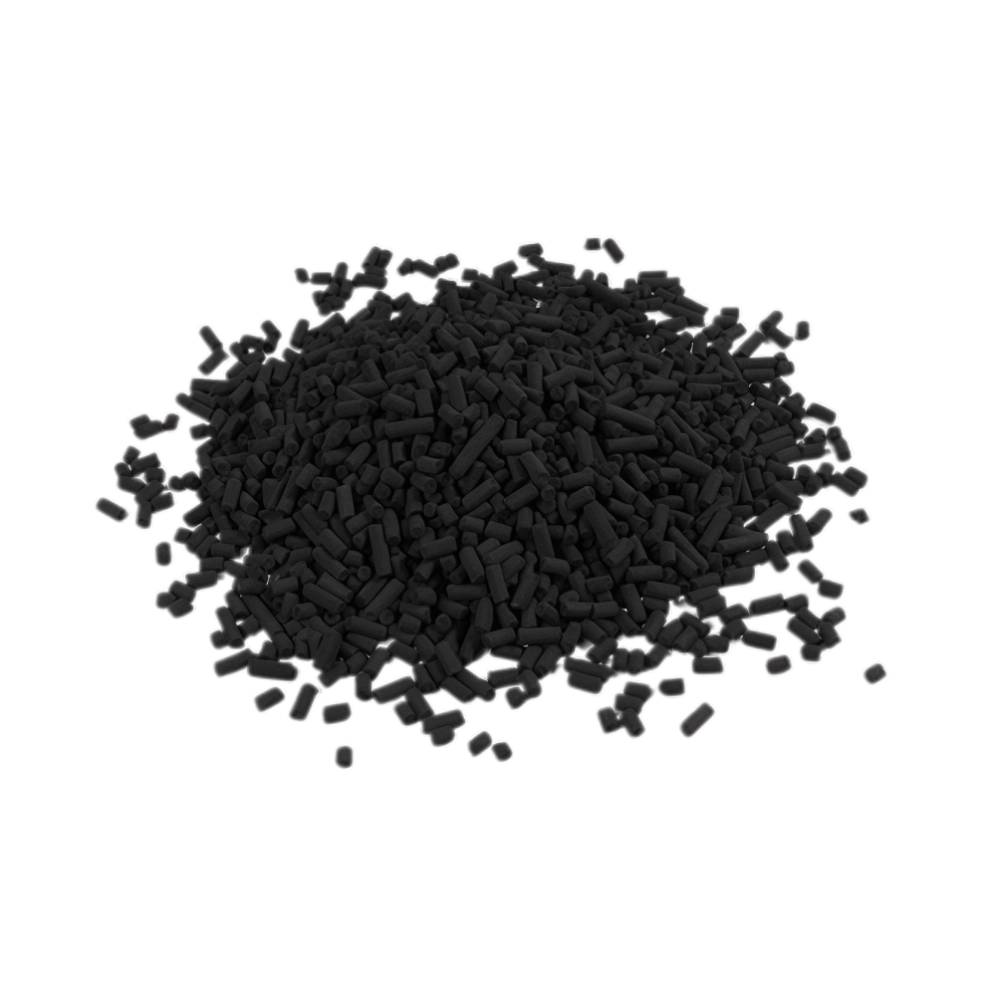
For many fixed-bed systems, pelletized activated carbon is a practical starting point. Its uniform cylindrical shape offers good mechanical strength and predictable airflow through the carbon bed.
But not every VOC project needs the highest available CTC grade.
For example, a relatively stable, moderate-load coating exhaust may have different requirements from a high-concentration solvent stream. Using a more highly activated carbon can increase media cost without necessarily producing the same proportional increase in field service life.
Purestar's PL-350/PL-450 50 CTC coal columnar carbon is positioned for general VOC and odor-control duties, while PL-360/PL-460 60 CTC carbon provides a higher-activity option for more demanding VOC loads.
The final selection should be based on the actual VOC composition and system conditions rather than CTC alone.
If you need a deeper explanation of VOC adsorption conditions, see our activated carbon for VOC removal guide.
2. H₂S: Do Not Treat It Like a Standard VOC
Hydrogen sulfide is a good example of why selecting carbon only by CTC can lead to the wrong product.
Standard activated carbon can physically adsorb some H₂S, but when hydrogen sulfide is a significant part of the contaminant load, specially impregnated activated carbon is normally a more appropriate starting point.
The impregnation changes the surface chemistry of the carbon and supports chemical removal of H₂S rather than relying only on physical adsorption.
This type of media is commonly considered for:
- Wastewater treatment plant exhaust
- Sewage pumping stations
- Sludge treatment areas
- Biogas purification
- Industrial sulfur-containing exhaust
For projects dominated by H₂S and related sulfur compounds, SRC-A 4 mm impregnated activated carbon pellets provide a more targeted option than simply increasing the CTC of a standard VOC carbon.
Practical rule: if H₂S is the main problem, first review carbon chemistry, not just adsorption activity.
3. Mixed Industrial Odors: Identify What the “Odor” Actually Contains
“Odor control” is often too broad to be a useful activated carbon specification.
A wastewater plant, waste-handling facility or industrial process may generate a mixture of:
- Hydrogen sulfide
- Mercaptans
- Other sulfur compounds
- Ammonia or amines
- Organic vapors
These contaminants do not necessarily respond to the same carbon chemistry.
If the gas stream contains several sulfur species, a blended impregnated media may be more suitable than a conventional VOC pellet. For example, SRC-BL blended impregnated activated carbon is designed for more complex sulfur-containing gas streams.
Where possible, environmental contractors should obtain gas-analysis data instead of specifying only “activated carbon for odor.”
For additional application information, see our industrial odor control solutions.
4. Solvent Recovery: Adsorption Capacity Is Only Part of the Decision
A solvent recovery system has a different operating objective from a conventional disposable VOC carbon bed.
In a normal exhaust adsorber, saturated carbon may eventually be replaced. In solvent recovery, the adsorption media may operate through repeated adsorption and regeneration cycles.
The carbon therefore needs to be evaluated for more than initial adsorption activity.
Important considerations include:
- Working capacity for the target solvent
- Pore structure
- Mechanical strength
- Performance through repeated cycles
- Compatibility with the regeneration process
High-activity vapor-phase activated carbon may be appropriate, but the exact grade depends on the solvent and recovery system design.
See our activated carbon for solvent recovery page for this application.
The Same “Activated Carbon Adsorber” Can Require Very Different Carbon
Consider three environmental projects:
| Project | Main Problem | Starting Carbon Direction |
|---|---|---|
| Coating Line Exhaust | Toluene and xylene VOCs | Pelletized vapor-phase carbon |
| Wastewater Pumping Station | Hydrogen sulfide | Impregnated H₂S removal carbon |
| Solvent Recovery Unit | Recoverable organic solvent vapor | High-activity carbon suitable for cyclic operation |
All three systems may contain what is generally called an “activated carbon bed,” but using the same carbon specification for all three would not be a sound engineering approach.
This is why carbon selection should follow:
Pollutant → Operating Conditions → Adsorber Design → Carbon Type → Carbon Grade
After Identifying the Carbon Type, Check the Operating Conditions
Once you know whether the project needs standard vapor-phase carbon, impregnated carbon or a specialty solvent-recovery grade, the next step is to check the actual system conditions.
The most useful information includes:
- Pollutant composition: What gases or VOCs are present?
- Concentration: What are the normal and peak inlet levels?
- Airflow: How much gas passes through the adsorber?
- Temperature: Is the exhaust entering the bed hot?
- Humidity: Is moisture likely to compete with adsorption?
- Bed dimensions: What are the carbon bed depth and vessel size?
- Outlet target: What removal performance is required?
These conditions help determine the required activity, pellet size, carbon loading and whether the proposed media is appropriate for the actual system.
What About 2 mm, 3 mm and 4 mm Pellets?
Pellet diameter mainly becomes important after the correct carbon chemistry has been identified.
Smaller pellets can provide faster mass transfer but normally create greater airflow resistance. Larger pellets can help reduce pressure drop in some high-flow systems.
| Pellet Size | General Consideration |
|---|---|
| 2 mm | Faster mass transfer, potentially higher pressure drop |
| 3 mm | Common balance between adsorption and airflow |
| 4 mm | Often considered where lower resistance and mechanical stability are important |
These are general engineering tendencies, not fixed rules. Bed depth, velocity and equipment design must still be considered.
For an existing adsorber that already performs well, matching the proven particle size is normally a sensible starting point unless the system is being redesigned.
Do Not Use CTC as a Standalone Buying Decision
CTC is useful for comparing gas-phase activated carbons, but a higher number does not automatically mean a better result in every exhaust system.
A VOC adsorber with the wrong particle size, excessive humidity, poor gas distribution or a carbon chemistry that does not match the target pollutant can still perform poorly even with a high-CTC media.
When comparing quotations, review CTC together with:
- Target contaminant
- Carbon type
- Pellet size
- Hardness
- Bulk density
- Operating temperature
- Humidity
- Pressure-drop requirements
For a detailed comparison of adsorption specifications, see our activated carbon iodine number and CTC guide.
Quick Selection Guide for Environmental Engineering Projects
| If Your Project Looks Like This... | Start by Evaluating... |
|---|---|
| General coating, printing or industrial VOC exhaust | Pelletized vapor-phase activated carbon |
| Moderate and stable VOC loading | General-duty 50 CTC carbon |
| Higher or variable VOC loading | Higher-activity gas-phase carbon |
| H₂S-dominant exhaust | Impregnated H₂S removal carbon |
| Mixed sulfur odors | Blended impregnated carbon |
| Solvent recovery with regeneration | High-activity carbon designed for cyclic operation |
| Existing adsorber needing an alternative supplier | Start by matching the current proven specification |
New Project or Replacement Project? Send Different Information
For a New Exhaust Treatment Project
Send us:
- Target pollutant or VOC composition
- Normal and peak concentration
- Airflow in m³/h
- Temperature
- Relative humidity
- Adsorber dimensions or carbon bed volume
- Required outlet concentration
- Estimated carbon quantity
For an Existing Adsorber
If the system is already operating and you are looking for an alternative activated carbon supplier, the process can be much simpler.
Send us:
- Current COA or TDS
- Current carbon type and grade
- CTC value
- Pellet or particle size
- Carbon loading quantity
- Current replacement interval
- Any current problem such as short service life, excessive dust or high pressure drop
Purestar can then compare the existing specification with available gas-phase carbon grades and recommend a suitable starting option for sample evaluation.
Final Takeaway
The best activated carbon for industrial exhaust treatment is not necessarily the carbon with the highest iodine number or CTC value.
The better approach is to first identify the pollutant, then select the appropriate carbon chemistry and finally optimize the grade according to the operating conditions and adsorber design.
For environmental EPC contractors and VOC treatment equipment manufacturers, this reduces the risk of over-specifying the carbon while also avoiding the cost of selecting a media that does not match the actual gas stream.
If you are working on an industrial VOC treatment, H₂S removal, odor-control or solvent-recovery project, send Purestar your pollutant composition, concentration, airflow and current carbon specification. We can help identify an appropriate carbon grade and provide samples for project evaluation.
Frequently Asked Questions
What activated carbon should I use for industrial VOC exhaust?
Pelletized or vapor-phase granular activated carbon is commonly used for VOC adsorption. The final grade should be selected according to the VOC composition, concentration, airflow, humidity and adsorber design.
Can standard VOC carbon be used for H₂S?
It may physically adsorb some H₂S, but impregnated activated carbon is generally a better starting point when hydrogen sulfide is a major contaminant because the media chemistry is designed specifically for reactive gas removal.
Should I always choose the highest CTC available?
No. Higher CTC can indicate greater vapor-phase activity, but actual performance also depends on the target contaminant, carbon chemistry, particle size and operating conditions.
How do I select activated carbon for mixed industrial odors?
First identify the main odor compounds. Streams containing H₂S, mercaptans, ammonia and organic vapors may require impregnated, blended or staged adsorption media rather than one standard VOC carbon.
Can Purestar match the carbon already installed in our VOC equipment?
Yes. Send the current COA or TDS, CTC, particle size, loading quantity and operating conditions. A comparable Purestar grade can then be evaluated before bulk replacement.


